
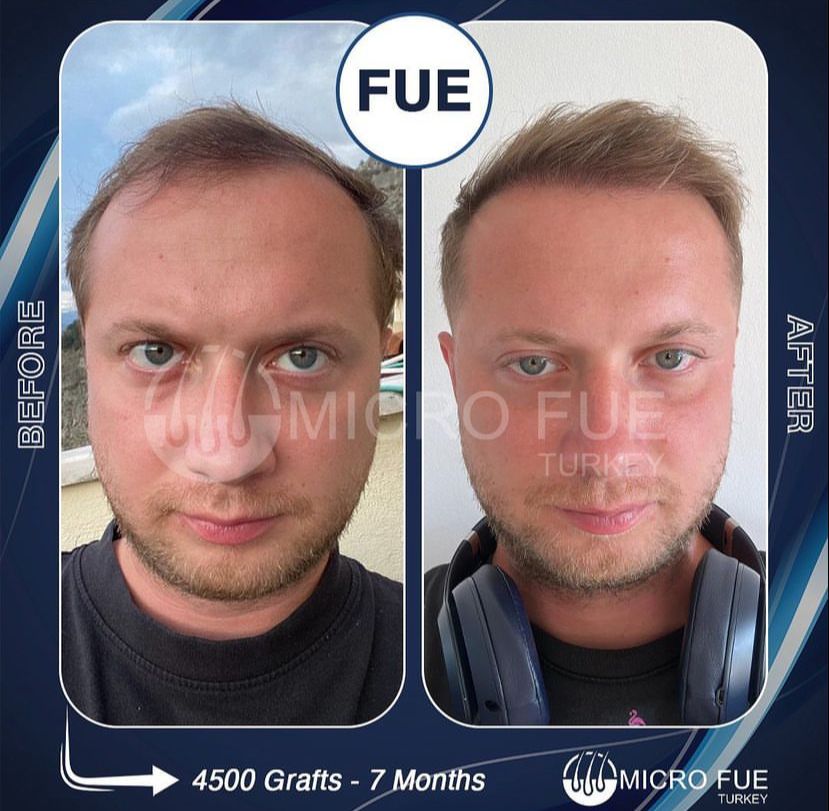
Weak Donor Area Hair Transplant: Can You Still Have Surgery?
A weak donor area hair transplant is one of the most challenging situations in modern hair restoration. Many patients with advanced hair loss, naturally low donor density or previous hair transplant procedures are told that they have a “weak donor area” and immediately assume that another hair transplant is impossible.
That is not always the case.
A weak donor area does not automatically mean that surgery cannot be performed. However, it does mean that treatment needs to be planned much more carefully. The available number of scalp grafts may be limited, the recipient area may need to be prioritised, and alternative donor sources such as beard hair may sometimes be considered.
The most important principle is simple: hair transplantation redistributes existing hair; it does not create new donor follicles. The permanent donor supply is finite, and professional guidance from the International Society of Hair Restoration Surgery (ISHRS) specifically emphasises that donor hair is a limited resource requiring careful assessment and long-term management. (ISHRS)
This complete guide explains what a weak donor area means, how donor density is assessed, whether FUE or DHI is possible, how many grafts may be available, when beard or body hair can be considered and when the safest recommendation may be not to proceed with surgery.
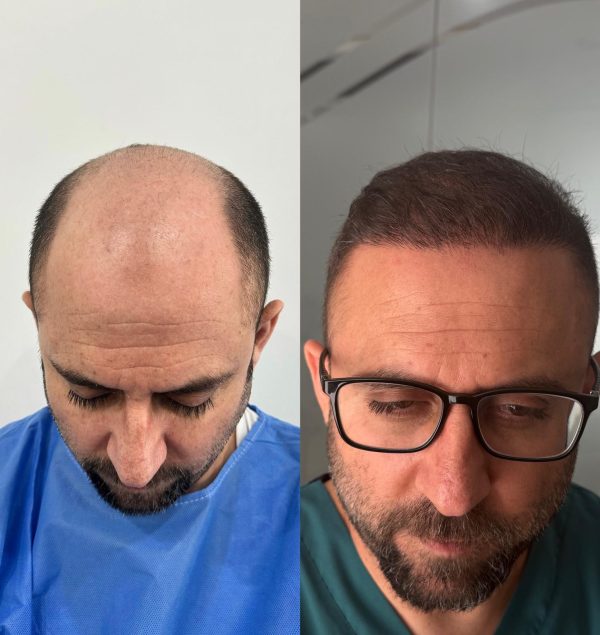
What Is the Donor Area in a Hair Transplant?
The donor area is the region from which follicles are harvested for transplantation.
For most male hair transplant patients, the primary donor area is located around the back and sides of the scalp.
Hair follicles in appropriately selected parts of this region tend to be more resistant to androgenetic hair loss than follicles on the frontal, mid-scalp and crown regions.
During FUE, individual follicular units are removed from the donor area and transplanted into areas affected by hair loss.
Once a follicular unit has been removed, another follicular unit does not simply grow in its place. This is why the donor supply must be managed conservatively. (ISHRS)
What Does a Weak Donor Area Mean?
A “weak donor area” is not one single diagnosis.
The term can describe several different situations, including:
- Naturally low follicular-unit density
- Fine or thin donor hairs
- A relatively small safe donor zone
- Diffuse thinning extending into the donor area
- Previous FUE overharvesting
- Multiple previous hair transplants
- Scarring from previous surgery
- Uneven donor density
- Progressive hair loss affecting traditionally stable regions
Two patients described as having weak donors can therefore have completely different treatment possibilities.
One may still have enough healthy scalp follicles for a conservative frontal restoration.
Another may have insufficient stable donor hair for a cosmetically worthwhile transplant.
A detailed examination is essential.
Why Is Donor Density Important?
Hair transplant patients understandably focus on the bald area.
From a long-term planning perspective, however, the donor area is equally important.
The amount of hair that can safely be moved depends partly on the number of follicular units present per square centimetre and how much density can remain after extraction.
Research published through the Hair Transplant Forum International explains that FUE donor capacity depends on variables including donor-area size, baseline follicular-unit density, extraction density and the residual density left afterward. (ishrs-htforum.org)
This explains why promising every patient “4,000 grafts” or “5,000 grafts” before properly measuring the donor area can be problematic.
The safe number is different for every patient.
How Is a Weak Donor Area Assessed?
A professional donor assessment should involve much more than looking at one photograph of the back of the head.
The medical team may evaluate:
- Follicular-unit density
- Hair shaft diameter
- Number of hairs per follicular unit
- Donor-area dimensions
- Hair colour
- Scalp colour
- Hair-to-skin contrast
- Curl or wave
- Previous extraction patterns
- Scarring
- Miniaturisation
- Stability of the donor region
ISHRS FUE guidance recommends assessing donor density in multiple locations and considering characteristics such as hair calibre, curl, colour and direction because these factors influence the visual appearance of density. (ISHRS)
The recipient area must then be assessed alongside the donor.
The question is not simply:
“How many grafts can we take?”
The better question is:
“How many grafts can we safely use to create a meaningful cosmetic improvement without leaving the donor area visibly depleted?”
Can You Have a Hair Transplant with a Weak Donor Area?
Potentially, yes.
But the answer depends on how weak the donor area actually is.
A patient with moderately reduced donor density may still be able to undergo a smaller FUE procedure.
For example, instead of attempting complete coverage from the frontal hairline to the crown, treatment could prioritise the frontal third.
Another patient may have sufficient scalp grafts for the hairline but require supplementary beard grafts for density farther behind the hairline.
In more severe cases, surgery may not be advisable.
A responsible consultation should be willing to say no when the expected cosmetic benefit does not justify further depletion of the donor area.
Weak Donor Area Does Not Mean “Take Everything Available”
This is one of the most important concepts for patients to understand.
If your donor area is already weak, aggressively extracting every available follicle is usually not a solution.
It can make the donor area look worse.
FUE overharvesting can create visible thinning and a patchy or “moth-eaten” appearance. ISHRS materials specifically identify excessive donor extraction as a potential cause of permanent donor depletion and scarring. (ISHRS)
The objective should therefore be preservation.
A smaller, strategically planned transplant can sometimes produce a better overall cosmetic result than a very large procedure that leaves both the donor and recipient areas looking thin.
What Is Donor Overharvesting?
Donor overharvesting occurs when too many follicular units are extracted or when extraction is poorly distributed.
Instead of maintaining reasonably uniform density, the donor region may become visibly sparse.
Possible signs include:
- Patchy donor density
- Excessive scalp visibility
- Uneven extraction patterns
- “Moth-eaten” appearance
- Numerous visible FUE scars
- Permanent-looking thinning
ISHRS warns that overharvesting can result from excessive extraction from a limited area and can permanently reduce donor density. (Fight the Fight)
Patients who have already undergone one or more FUE procedures need particularly careful reassessment before another surgery.
Can an Overharvested Donor Area Be Used Again?
Sometimes, but not always.
The medical team needs to determine how much viable donor hair remains and whether additional extraction would make the appearance worse.
Repeat FUE is more complicated because the surgeon must account for follicles that were already removed and the density remaining between previous extraction sites.
Published hair restoration literature specifically highlights the importance of estimating previous extraction density before repeat FUE to reduce the risk of further overharvesting. (ishrs-htforum.org)
If the donor area is severely depleted, another large scalp FUE procedure may not be appropriate.
Alternative strategies may need to be discussed.
Can Beard Hair Be Used When the Scalp Donor Is Weak?
Yes, in selected patients.
Beard hair is one of the most important alternative donor sources in advanced hair restoration.
FUE makes it possible to extract individual follicular units from suitable beard areas and transplant them to the scalp.
Medical literature has documented the use of beard and body hair as supplementary donor sources for patients with insufficient scalp donor supply. (PubMed)
However, beard hair is not identical to scalp hair.
It may be:
- Thicker
- Coarser
- More wiry
- Differently curled
- Different in colour
- Different in growth characteristics
These characteristics need to be considered when deciding where beard grafts should be implanted.
Where Can Beard Grafts Be Used?
Beard grafts can be valuable for adding visual density, particularly in selected areas behind the frontal hairline.
Because beard hair is often thicker than scalp hair, it can contribute substantial visual coverage.
However, thick beard follicles may not be the first choice for creating the delicate leading edge of a natural hairline.
Scalp single-hair grafts are often more appropriate for this region.
A combined strategy may therefore use:
Scalp hair: Hairline and aesthetically sensitive frontal zones.
Beard hair: Density farther behind the hairline or selected mid-scalp areas.
The exact strategy depends on how closely the beard hair matches the scalp hair.
Recent research also emphasises that beard suitability depends on characteristics including density, diameter, curl and colour contrast rather than simply whether the patient can grow a beard. (PubMed)
How Many Beard Grafts Can Be Used?
There is no universal number.
Beard density varies enormously.
Some patients have a strong, dense beard and potentially useful donor capacity. Others have patchy facial hair that provides relatively little usable material.
A retrospective analysis of advanced hair-loss cases described the use of approximately 1,000–1,500 beard follicular units in many cases to supplement limited scalp donor hair, but this should not be interpreted as a standard number for every patient. (PubMed Central (PMC))
The beard donor area must be assessed independently.
Can Body Hair Be Used for Hair Transplantation?
Body hair may also be considered in selected advanced cases.
Potential donor regions can include the chest or other appropriate body areas.
However, body hair characteristics may differ considerably from scalp hair in:
- Growth cycle
- Length
- Diameter
- Texture
- Curl
- Density
Research indicates that transplanted beard and body hairs generally retain important characteristics from their original donor location rather than simply transforming into scalp hair. (PubMed Central (PMC))
For this reason, body hair should not be marketed as an unlimited substitute for scalp donor hair.
It is an additional resource for carefully selected patients.

Scalp Hair vs Beard Hair vs Body Hair
When donor supply is limited, the different sources should be used strategically.
Scalp Hair
Usually the preferred donor source because it most closely matches the recipient scalp.
Beard Hair
Can provide thicker follicles and useful supplementary coverage in selected patients.
Body Hair
May provide an additional reserve but is generally more variable in its characteristics.
The goal is not simply to collect the largest possible graft number from every part of the body.
The goal is to create a natural-looking result.
FUE Hair Transplant with a Weak Donor Area
FUE can still be possible when donor density is reduced.
However, extraction needs to be especially conservative.
The surgeon must distribute extraction carefully across an appropriate donor region rather than removing too many follicles from one small area.
Hair length can also affect how donor thinning is perceived.
ISHRS notes that unshaven FUE can allow a surgeon to monitor visible donor thinning during extraction, potentially helping avoid excessive harvesting. (ISHRS)
The appropriate technique must nevertheless be selected individually.
DHI with a Weak Donor Area
DHI changes the implantation approach, not the fundamental limitation of donor supply.
Using an implanter pen cannot create additional donor follicles.
Therefore, switching from FUE implantation to DHI does not solve a genuinely weak donor area.
DHI may be useful when precise implantation around existing hairs is required, but the total available graft number still depends on donor capacity.
Patients should be cautious of claims that a particular implantation technique can overcome severe donor deficiency.
Sapphire FUE with a Weak Donor Area
The same principle applies to Sapphire FUE.
Sapphire blades relate primarily to recipient-site creation.
They do not increase the number of follicles available in the donor region.
Whether Sapphire FUE is appropriate should be determined according to the recipient-area plan and the patient’s overall treatment requirements.
The fundamental limitation remains donor supply.
Weak Donor Area and Advanced Hair Loss
Advanced Norwood patterns create one of the biggest challenges in hair restoration.
A patient with Norwood 5, 6 or 7 hair loss may have a very large recipient area while possessing only a limited safe donor supply.
Trying to recreate youthful density across the entire bald scalp is often unrealistic.
Published research on advanced hair loss describes supplementing scalp grafts with beard or body follicles in selected patients when scalp supply is insufficient. (PubMed Central (PMC))
But even with alternative donor sources, expectations must remain realistic.
Should You Prioritise the Hairline or Crown?
When donor hair is limited, the frontal region often deserves priority.
Why?
Because the hairline frames the face.
Restoring the frontal area can create a substantial cosmetic change even if the crown remains relatively thin.
The crown, by comparison, can consume a very large number of grafts.
ISHRS educational material on revision surgery specifically notes that using valuable donor hair in the crown too aggressively can be problematic, particularly in younger patients. (ISHRS)
A weak-donor patient may therefore benefit from a conservative frontal restoration rather than attempting complete scalp coverage.
Can 2000 Grafts Be Better Than 4000?
Absolutely.
More grafts do not automatically mean a better hair transplant.
Suppose one patient’s donor area can safely provide approximately 2,000 useful grafts while preserving a natural appearance.
Aggressively attempting to remove 4,000 could damage the donor area.
A carefully placed 2,000-graft frontal restoration may provide a stronger overall cosmetic result.
Graft numbers should be the result of medical planning—not a sales target.
Hair Characteristics Can Compensate for Lower Graft Numbers
Graft count is only one part of visual density.
Patients with:
- Thick hair
- Wavy or curly hair
- Low hair-to-scalp colour contrast
- High numbers of multi-hair follicular units
may achieve greater visual coverage from a limited number of grafts.
Patients with very fine, straight hair and high colour contrast may require more grafts to create a similar visual effect.
This is why donor assessment must evaluate hair quality as well as quantity.
Can a Second Hair Transplant Be Done with a Weak Donor?
Potentially.
But previous surgery changes the calculation.
The medical team should evaluate:
- Number of previous procedures
- Estimated previous graft extraction
- Remaining donor density
- FUE scar distribution
- Recipient-area requirements
- Hair-loss progression
- Alternative donor sources
Patients should provide previous surgical records if available.
Knowing how many grafts were previously extracted can help with planning, although exact numbers are not always available.
Weak Donor Area After a Failed Hair Transplant
Patients seeking repair surgery can be particularly difficult cases.
A failed transplant may involve both:
- Poor recipient-area results, and
- A damaged or depleted donor area.
Repair may require correcting an unnatural hairline, improving density, disguising scars or addressing overharvesting.
The challenge is that every correction consumes additional donor resources.
IAHRS and ISHRS educational materials both describe severely depleted donor zones as among the more difficult repair situations. (IAHRS)
Some cases can be improved.
Others cannot be fully restored.
Can the Donor Area Grow Back?
Extracted follicular units should not be expected to regenerate as a complete replacement donor supply.
Hair surrounding the extraction sites continues growing, which can visually camouflage well-distributed FUE extraction.
This is why proper spacing matters.
If too many grafts are removed, the remaining hair may no longer provide sufficient coverage.
Patients should be sceptical of claims that an overharvested donor area will simply “grow back” completely.
What If You Have Almost No Donor Hair?
If there is insufficient stable scalp, beard or appropriate body donor hair, surgical transplantation may not be capable of providing a worthwhile result.
At this point, the correct answer may be not to perform another transplant.
Non-surgical cosmetic approaches can potentially be discussed depending on the individual situation.
The important point is that surgery should not be performed merely because a patient wants surgery.
There must be enough appropriate donor hair to justify the procedure.
Why Mega Sessions Can Be Risky for Weak Donors
Advertisements promising “maximum grafts” or extremely large graft counts can be particularly dangerous for patients with limited donor capacity.
ISHRS warns that marketing based on extracting as many grafts as possible can contribute to overharvesting, permanent density reduction and visible donor scarring. (Fight the Fight)
A high graft number should therefore never be treated as proof of quality.
For weak donors, conservative planning is often more sophisticated than aggressive harvesting.
How to Choose a Clinic When Your Donor Area Is Weak
A weak donor case requires careful medical planning.
Before booking, ask:
- How will my donor density be measured?
- How many grafts can safely be extracted?
- What density will remain afterward?
- Is my donor area miniaturising?
- Do I need beard grafts?
- Where would beard grafts be implanted?
- Should my crown be left untreated?
- Am I likely to need another procedure later?
- What happens if fewer grafts are available than expected?
- Who performs the donor extraction?
Be cautious if the answer to every case is simply “maximum grafts.”
Red Flags for Weak-Donor Patients
Patients should be particularly careful if a provider:
- Promises 4,000–6,000 grafts from photographs alone
- Does not examine donor density
- Guarantees complete coverage
- Ignores future hair loss
- Promises unlimited beard or body grafts
- Does not discuss overharvesting
- Refuses to explain who performs extraction
- Uses aggressive sales pressure
ISHRS has repeatedly warned about unqualified hair-transplant providers and donor overharvesting, including cases involving depleted donor regions, scarring and poor growth. (Fight the Fight)
Frequently Asked Questions About Weak Donor Area Hair Transplant
Can I have a hair transplant with a weak donor area?
Possibly. It depends on remaining donor density, hair characteristics, recipient-area size and whether a meaningful improvement can be achieved without excessive harvesting.
What if my donor area is very thin?
A detailed assessment is required. A smaller procedure may be possible, alternative donor hair may be considered, or surgery may be discouraged if the donor supply is inadequate.
Can beard hair replace scalp donor hair?
Beard hair can supplement scalp grafts in selected patients, but it has different characteristics and should be used strategically rather than treated as an identical replacement. (PubMed)
Can chest hair be transplanted to the scalp?
Selected body hair can potentially be used through FUE, but suitability depends on density, calibre, growth characteristics and the intended recipient area.
Is DHI better for a weak donor area?
DHI does not increase donor capacity. It changes the implantation method, so donor limitations still apply.
Can an overharvested donor area be repaired?
Some cases can be cosmetically improved, but severe donor depletion can be difficult or impossible to fully reverse. (IAHRS)
How many grafts can be taken from a weak donor area?
There is no universal number. Safe extraction depends on donor size, density, hair characteristics, previous surgery and the amount of residual density required.
Can I have a second transplant if my donor area is weak?
Potentially, but remaining donor capacity must be carefully measured before another procedure.
Is 5000 grafts possible with a weak donor?
A predetermined 5,000-graft target should not be assumed safe. High graft requirements can increase the risk of visible donor thinning in patients with limited donor capacity. (ishrs-htforum.org)
What happens if I do not have enough donor hair?
Treatment may need to focus on a smaller recipient area, incorporate appropriate alternative donor sources, or be avoided if surgery cannot provide a worthwhile cosmetic improvement.
Final Verdict: Can You Have a Hair Transplant with a Weak Donor Area?
A weak donor area does not automatically rule out hair transplant surgery, but it fundamentally changes how the procedure should be planned.
The correct strategy may involve fewer scalp grafts, conservative FUE extraction, prioritising the frontal hairline instead of the crown, preserving follicles for future hair loss or supplementing appropriate scalp grafts with carefully selected beard hair.
For some patients, 1,500–2,000 strategically positioned grafts may produce a more attractive and sustainable result than attempting an aggressive 4,000-graft procedure.
For others, the combination of scalp and beard donor hair can expand the available options.
And for patients with severely depleted or unstable donor areas, the responsible recommendation may be to avoid further surgery.
The central principle is that donor hair is finite. ISHRS guidance consistently stresses the importance of donor assessment and avoiding overharvesting because excessive extraction can produce permanent visible thinning and limit future treatment options. (ISHRS)
Therefore, if you have been told that your donor area is weak, do not begin by asking:
“How many grafts can you take?”
Begin with:
“How many grafts can safely be taken while keeping my donor area natural and preserving my future options?”
That question leads to a much more responsible hair restoration plan.