Hair Transplant Taksim
FUE, Sapphire FUE and DHI in central Istanbul
Hair Transplant Taksim provides information for international patients researching FUE, Sapphire FUE and DHI, including donor assessment, graft planning, recovery and treatment planning in Istanbul.
Request Your Consultation
Send your details for a preliminary assessment before travelling to Istanbul.
Your details are used only to respond to your enquiry and are handled confidentially.
Hair Transplant Taksim: FUE, Sapphire FUE and DHI treatment planning, donor assessment, graft distribution, recovery and practical guidance for international patients.
Hair Transplant Taksim
Hair restoration in central Istanbul, planned around your donor area.
A hair transplant redistributes a limited supply of donor hair. Good planning therefore matters more than simply aiming for the highest graft number.
This guide explains suitability, graft planning, techniques, procedure day, recovery and costs so you can plan with realistic expectations.
FUE / DHITechnique selected individually
Donor firstConservative graft planning
About 12 monthsGradual growth and maturation
What is Hair Transplant Taksim?
Hair transplantation moves suitable follicular units from a donor area, usually the back and sides of the scalp, to areas where additional coverage is desired.
For international patients, planning may begin with photographs before travel and continue with an in-person assessment in Istanbul before the final treatment plan.
A hair transplant does not create new follicles. It redistributes an existing and limited donor resource, which makes long-term planning important.
Individual assessment: photographs can support preliminary planning, but final graft numbers, donor capacity and hairline design should be confirmed in person.
Hair restoration options in Taksim
Each option below has its own detailed guide. The right choice always depends on an individual assessment.
Who may be suitable?
Suitability depends on the cause and pattern of hair loss, the quality of the donor area, scalp condition and general medical suitability.
- Adequate donor hair
- Realistic expectations
- Suitable recipient area
- Understood hair-loss pattern
- Medical suitability
- Long-term planning
Sudden, unexplained or diffuse hair loss may require medical or dermatological assessment before transplantation is considered.
Graft planning
The right graft number is not decided by photographs or a package name alone. Scalp size, donor density, hair calibre and treatment priorities all matter.
Hairline
Single-hair grafts, natural angles and small irregularities can help create a softer frontal transition.
Mid-scalp
Distribution should maintain visual balance when thinning continues behind the hairline.
Crown
The crown can require many grafts because of its surface area and spiral growth pattern.
Donor reserve
Safe donor management should also consider future hair loss and possible later treatment.
More grafts do not automatically mean a better result. Protecting the donor area is an important part of long-term planning.
FUE, Sapphire FUE and DHI
FUE
Follicular units are individually extracted from the donor region and relocated to planned recipient areas.
Sapphire FUE
This generally refers to FUE combined with sapphire blades during recipient-site preparation.
DHI
DHI uses implanter pens during graft placement and may be appropriate in selected treatment plans.
What happens on procedure day?
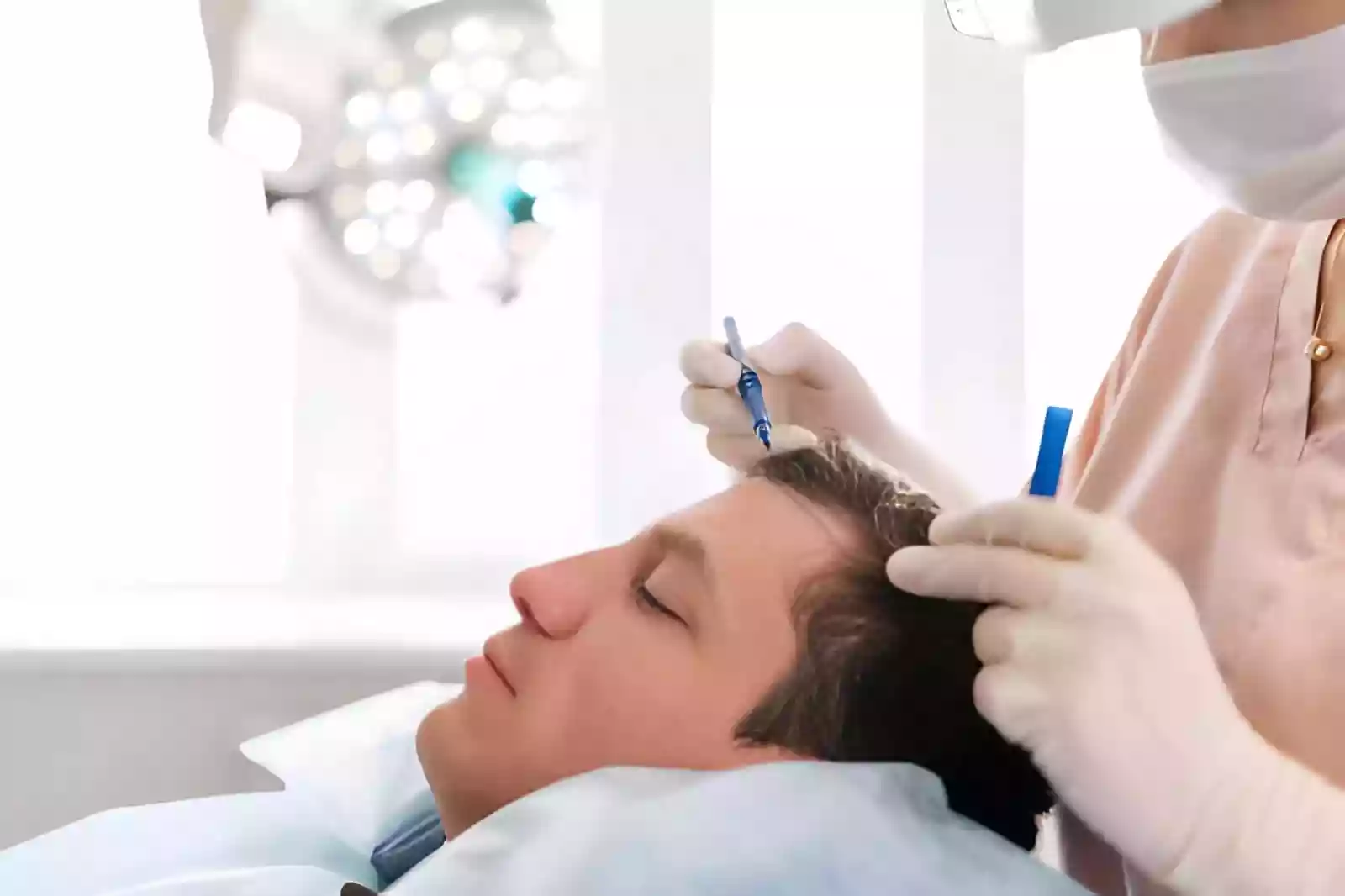
The proposed hairline, treatment areas and donor region are reviewed before the final plan is confirmed.
Local anaesthesia is commonly used. Follicular units are extracted, protected and then implanted according to the selected technique and treatment strategy.
Before booking, ask who performs the assessment, hairline design, extraction, recipient-site preparation and implantation.
Donor area planning
The donor region contains a limited number of follicles that can be harvested without creating an excessively thin appearance.
Density, hair calibre, follicular-unit distribution and future hair loss all influence safe donor planning.
Overharvesting may cause visible thinning, so the goal should not simply be to extract the largest possible number.
Recovery and hair growth
Recovery develops in stages and individual instructions should always take priority over a general timeline.
No guaranteed result: healing, growth, density and cosmetic appearance vary between individuals.
Hair transplant cost factors
A quotation should reflect the individual treatment plan rather than relying only on an advertised graft number.
| Factor | Why it matters |
|---|---|
| Graft requirement | Larger treatment areas can require more time and more detailed donor planning. |
| Technique | FUE, Sapphire FUE and DHI involve different workflows. |
| Case complexity | Previous procedures, scar tissue, curly hair or limited donor supply can affect planning. |
| Medical services | Tests, medication, first washing and follow-up should be explained in advance. |
| Travel services | Accommodation and transfers may be included or organised separately. |
How to evaluate a treatment provider
Patients should know who evaluates the donor region, who designs the hairline and who performs each stage of the procedure.
- Ask who performs each stage
- Understand donor assessment
- Discuss future hair loss
- Confirm aftercare access
A responsible consultation should explain limitations as clearly as potential benefits and should avoid guaranteed-result claims.
Start with a free preliminary assessment
Share your details and photos to receive an initial opinion before planning your trip to Istanbul.
Planning your stay in Taksim
Taksim and Beyoğlu provide a central base for many international visitors, with accommodation, restaurants, pharmacies and transport connections nearby.
Taksim Square, Beyoğlu
Choose accommodation according to the actual treatment location and keep the first recovery days comfortable and uncomplicated.
Hair Transplant Taksim FAQ
01 What does Hair Transplant Taksim involve?
It involves moving suitable follicular units from a donor area to areas requiring additional coverage after individual assessment and planning.
02 How many grafts do I need?
The number depends on donor density, hair calibre, scalp size, recipient-area requirements and long-term planning.
03 Which is better, FUE or DHI?
Neither is automatically better for every patient. The technique should follow the individual treatment plan.
04 What is Sapphire FUE?
Sapphire FUE generally refers to FUE extraction combined with sapphire blades during recipient-site preparation.
05 When does transplanted hair grow?
Early growth may become noticeable around months 3–4 and generally continues developing over the following months.
06 Are results guaranteed?
No. Healing, hair growth, density and cosmetic appearance vary between individuals.
07 Can women have a hair transplant?
Selected women may be suitable candidates, but diffuse thinning and donor stability require careful assessment.
08 How long should I stay in Istanbul?
The recommended stay depends on the individual schedule and should allow sufficient time for assessment, treatment, first washing and early follow-up.