Dental Implants in Taksim covers implant treatment, candidacy, bone assessment, procedure stages, recovery, risks, costs and aftercare in Istanbul.
 Dental Implants in Taksim
+
Dental Implants in Taksim
+Dental Implants in Taksim
IMPLANT DENTISTRY • TAKSIM • ISTANBULDental implants are used to replace missing teeth by placing an implant fixture in the jaw and later connecting it to a dental restoration. Depending on the case, implants can support a single crown, several replacement teeth or a larger implant-supported restoration.
The treatment is surgical and should begin with an individual assessment of oral health, available bone, gums, neighbouring teeth, bite and relevant medical factors. Not every patient follows the same implant plan or treatment timeline.
Dental Implants in Taksim: What Are Dental Implants?
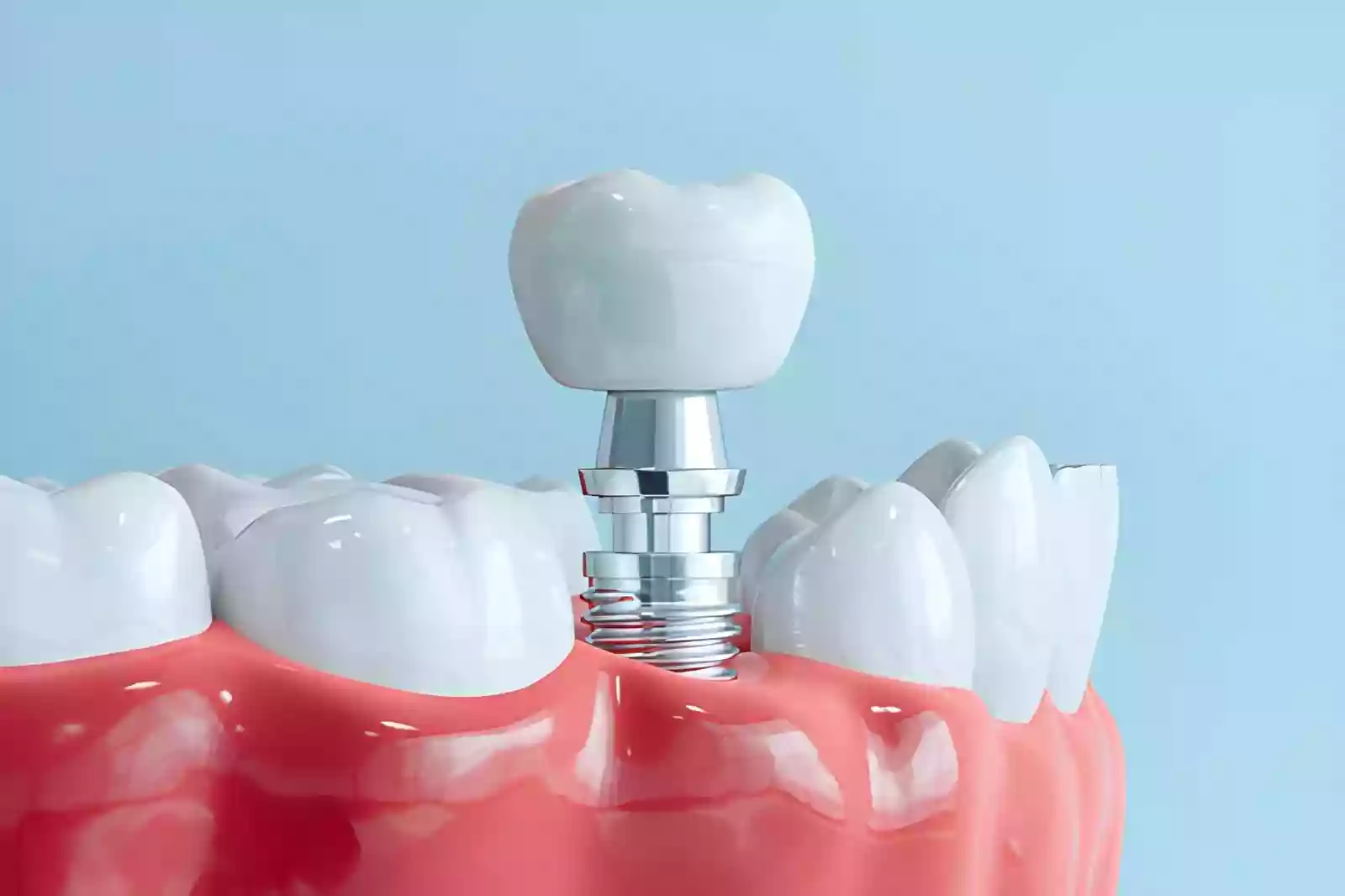
A dental implant is an artificial structure placed into the jaw to provide support for a replacement tooth or larger dental restoration. The implant itself is only one part of the final treatment.
After appropriate healing and restorative planning, an implant can be connected to an abutment and a crown or another type of prosthetic restoration. The exact components and sequence depend on the patient’s clinical situation.
Dental implants may be considered when one tooth, several teeth or a larger number of teeth are missing. Whether they are appropriate depends on much more than the visible gap alone.
 Dental Implant Assessment in Taksim
+
Dental Implant Assessment in Taksim
+Understanding the Parts of a Dental Implant Restoration
Patients sometimes use “implant” to describe the entire replacement tooth. In practice, implant treatment can involve several separate components.
The fixture is surgically positioned in the jawbone and acts as the foundation for the planned restoration.
An abutment or another restorative connection can link the implant fixture with the visible dental restoration.
The visible part is designed to replace the missing tooth or teeth and must be planned in relation to appearance, function and bite.
Dental Examination and Implant Planning
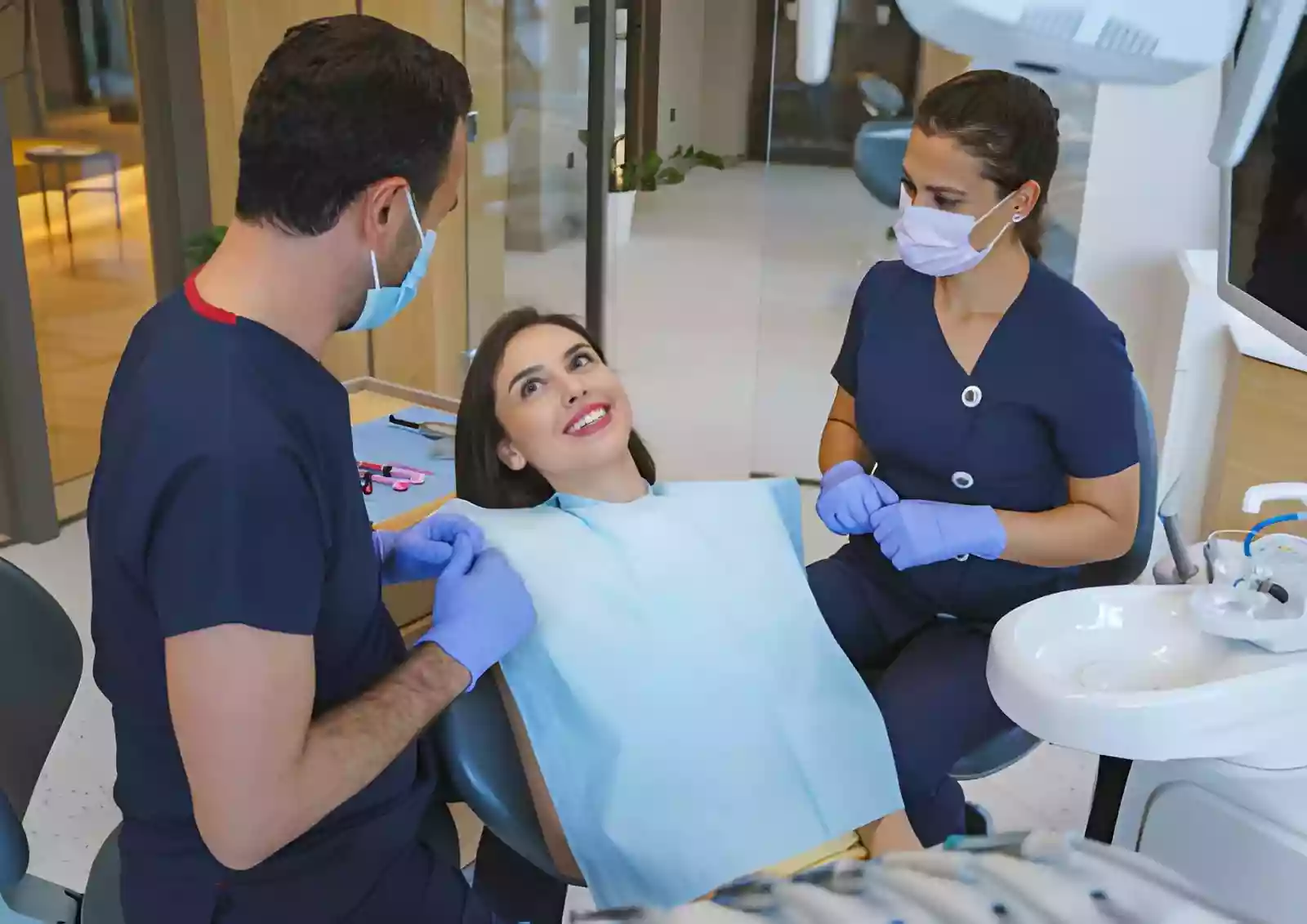
Implant treatment begins before surgery. The dental team needs to understand the missing tooth area as well as the surrounding structures and the final restoration that the implant is expected to support.
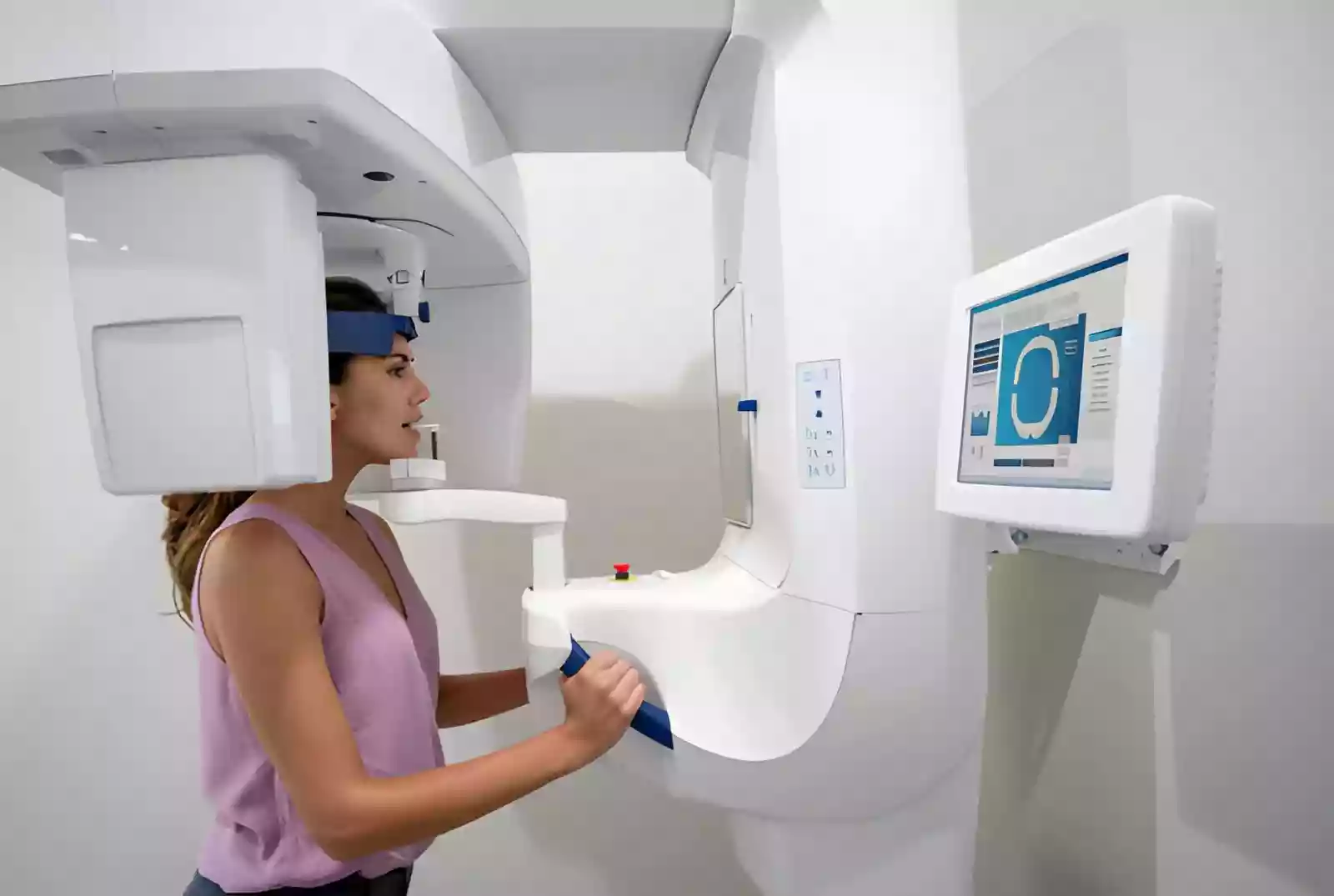
Depending on the case, planning may involve a clinical examination, dental imaging and other records considered appropriate by the treating clinician.
The number of implants required is also not necessarily the same as the number of missing teeth. Larger restorations can use different implant configurations depending on anatomy, restorative design and clinical judgment.
 Planning Dental Implant Treatment
+
Planning Dental Implant Treatment
+Dental Implant Procedure: Step by Step
Not every case requires every stage below, and timing can vary. Some patients require preliminary treatment before implant placement, while others may follow a more direct treatment sequence.
Consultation and Diagnosis
The dentist evaluates the missing teeth, oral health, gums, bite, medical history and the patient’s expectations for the final restoration.
Imaging and Surgical Planning
Appropriate imaging can help the clinician evaluate bone anatomy and nearby structures and determine whether additional procedures need consideration.
Implant Placement
The implant fixture is surgically placed according to the planned position. The exact surgical approach depends on the individual case.
Healing Period
A period of healing is commonly required before the implant receives its final restoration. The required time varies between patients and treatment protocols.
Restorative Stage
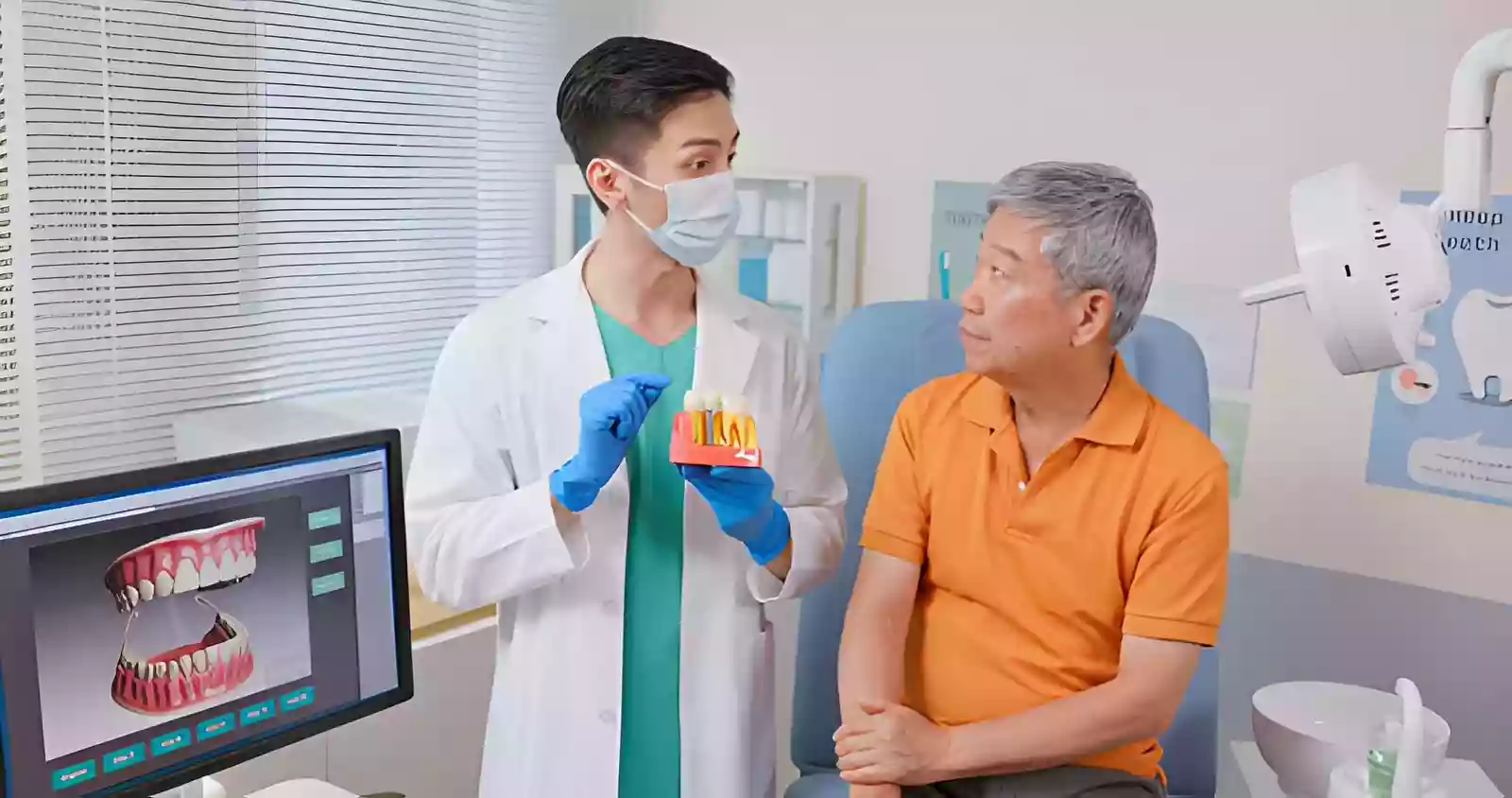
After the implant is considered ready for restoration, the dental team plans the abutment and final crown, bridge or other prosthetic restoration.
Review and Maintenance
Fit, function, bite and surrounding tissues should be reviewed, followed by an individualized long-term maintenance plan.
 Bone Assessment Before Dental Implants
+
Bone Assessment Before Dental Implants
+Why Bone Assessment Matters
The jaw must be evaluated before implant placement because implant planning depends on the available anatomy. Bone conditions vary between patients and between different areas of the same mouth.
The clinician assesses whether sufficient bone is available in the proposed implant area.
Implant planning must account for nearby structures such as nerves, neighbouring teeth and sinus anatomy where relevant.
Some patients may require or be offered bone augmentation or another preliminary procedure. This is case-dependent rather than automatic.
If additional surgery is required, the overall implant treatment sequence and healing period may change.
Types of Dental Implant Treatment
The term “dental implants” includes several restorative situations. Treatment design depends on how many teeth are missing, the condition of the remaining teeth and the planned final prosthesis.
Dental implants can provide support for replacement teeth without requiring the same support from adjacent teeth as a conventional tooth-supported bridge. For suitable patients, they can offer a fixed restorative option in selected situations.
Implant treatment can also help restore chewing function and appearance after tooth loss. However, the final result depends on the implant, surrounding tissues and quality and design of the restoration working together.
Implants should not be described as maintenance-free or indestructible. The implant and the tissues around it remain susceptible to biological and mechanical complications.
Immediate Implant and Immediate Teeth: Are They the Same?
No. The terminology can be confusing. Immediate implant placement generally refers to implant placement at the time a tooth is removed in a suitable case. Immediate loading or provisionalization concerns when a restoration is connected to an implant.
These approaches are not automatically appropriate for every patient. Anatomy, primary stability, infection status, bite, restorative design and other clinical factors can affect the decision.
 Dental Implant Procedure and Restoration
+
Dental Implant Procedure and Restoration
+Dental Implant Risks and Complications
Dental implant placement is a surgical procedure. Risks vary according to the treatment area, patient’s health, surgical complexity and other factors.
Individual risk should be discussed with the treating dental professional after examination and appropriate imaging. Online photographs alone cannot establish surgical suitability.
Recovery After Dental Implant Surgery
Recovery varies according to the number and position of implants, whether extractions or additional procedures were performed and individual healing. The following is a general framework rather than a fixed schedule.
Swelling, tenderness, minor bleeding or bruising can occur after surgery. Patients should follow the medication, hygiene, eating and activity instructions provided by their clinician.
The dental team may review healing and the surgical site according to the procedure performed and individual requirements.
The implant commonly requires time to heal before final restorative loading. The duration cannot be determined from a general website article.
When clinically appropriate, impressions or digital records can be used to prepare the planned crown, bridge or larger restoration.
Implants require effective plaque control and professional monitoring of the restoration and surrounding tissues.
 Dental Implant Recovery and Aftercare
+
Dental Implant Recovery and Aftercare
+Long-Term Dental Implant Aftercare
Implants cannot develop tooth decay in the same way as natural teeth, but this does not remove the need for hygiene. Plaque and inflammation around implant-supported restorations can affect the surrounding gum and bone.
Patients should follow an oral-hygiene routine appropriate to the type of restoration. Cleaning around a single implant crown may differ from cleaning underneath a larger implant-supported bridge.
Dental Implant Cost in Taksim
The cost of Dental Implants in Taksim cannot be determined reliably from the implant fixture alone. The complete treatment may include diagnostic records, surgery, implant components, an abutment, the final restoration and additional treatment where clinically necessary.
Cost can also vary according to the number of implants, complexity of surgery, type of final restoration, laboratory work and whether procedures such as extraction or bone augmentation are part of the treatment plan.
For international patients, it is useful to request a written treatment plan showing what is included and which parts of the treatment occur during each visit.
Alternatives to Dental Implants
An implant is not the only method of replacing missing teeth. The appropriate alternative depends on the number and position of missing teeth, the remaining teeth, oral health and patient preferences.
Conventional Dental Bridge
A bridge can replace a missing tooth or teeth using neighbouring teeth for support. The condition of those supporting teeth is important when comparing this option with an implant.
Removable Partial Denture
A removable prosthesis can replace several missing teeth without using the same surgical approach as implant placement.
Complete Denture
For patients missing all teeth in an arch, a conventional removable denture remains one of the possible prosthetic approaches.
The advantages and limitations of each option should be compared for the individual patient rather than assuming that one treatment is universally superior.
Questions to Ask Before Choosing an Implant Clinic
For international patients in particular, knowing exactly what is included in the treatment plan can make comparison easier and reduce misunderstandings between the surgical and restorative stages.
Who will perform the implant surgery and who will complete the restorative stage?
What examination and imaging are required before deciding whether I am suitable for implants?
Which implant system and components are proposed, and will I receive documentation of them?
Does my treatment require extraction, bone augmentation or another additional procedure?
How many separate treatment visits are expected and which stages are completed during each visit?
Is any restoration placed during the initial visit temporary or final?
What complications and maintenance requirements should I understand before treatment?
What information and records will I receive for future dental care after returning home?
For a wider overview of dental treatment planning, see our guide to finding the right dentist in Taksim.
Planning Dental Implant Treatment in Taksim, Istanbul
Taksim’s central Istanbul location can be convenient for international patients combining dental appointments with accommodation in Beyoğlu and access to other parts of the city.
Implant dentistry, however, should not be planned as ordinary short-stay cosmetic treatment. Some cases involve healing between the surgical and restorative stages, which can mean separate visits rather than completing every stage during one trip.
Before booking flights, patients should understand which appointments are required, whether additional treatment may change the schedule and when the final restoration is expected.
View Taksim Square on Google Maps → Taksim, Istanbul for Dental Implant Patients
+
Taksim, Istanbul for Dental Implant Patients
+Dental Implant Treatment Should Be Planned for the Long Term
Replacing a missing tooth is not only about filling the visible space. Implant planning needs to consider the final restoration, surrounding tissues, hygiene access, bite and how the treatment will be maintained after completion.
This is particularly important for patients travelling internationally. Records of the implant system and restorative components can be useful if maintenance or treatment is later required in another country.
Long-Term Dental Implant Planning
+Dental Implants in Taksim: Frequently Asked Questions
01What are dental implants?
02Who may be suitable for Dental Implants in Taksim?
03How long does dental implant treatment take?
04Do dental implants last forever?
05What if I do not have enough bone for an implant?
06Can dental implants be completed in one day?
07How much do Dental Implants in Taksim cost?
08What are the alternatives to dental implants?
Dental Implants in Taksim: A Treatment Plan Should Come First
Dental Implants in Taksim can be considered for single-tooth replacement, several missing teeth or larger implant-supported restorations, but the appropriate solution depends on individual anatomy and dental needs.
A careful plan should consider oral health, available bone, implant position, the final restoration, bite, hygiene access and relevant medical factors. Patients should also understand that the surgical and restorative stages may occur at different times.
For international patients, the written plan should clearly identify the procedures, implant system, expected number of visits, temporary and final restorations, potential additional treatment, risks and long-term maintenance requirements.
The objective is not simply to place an implant. It is to create a replacement tooth or prosthesis that can be monitored, cleaned and maintained as part of the patient’s overall oral health.