Hybrid Hair Transplant Turkey explains combined FUE, Sapphire FUE and DHI planning, donor management, recovery, risks and choosing a clinic in Turkey.
 Hybrid Hair Transplant Turkey
+
Hybrid Hair Transplant Turkey
COMBINED HAIR RESTORATION PLANNING • TURKEYA hybrid hair transplant generally describes a treatment plan in which more than one hair-transplant approach or implantation strategy is used within the same overall restoration plan.
The important point is that “hybrid” is not one universally standardized technique. A clinic should explain exactly what it means by the term, which methods are being combined, why they are being recommended and how the plan relates to your donor capacity and areas of hair loss.
What Does Hybrid Hair Transplant Mean?
The word hybrid can be confusing because it does not automatically identify one specific surgical protocol. It is better understood as a description of a combined treatment strategy.
Depending on the provider and individual case, the term may refer to combining different recipient-site or implantation approaches, such as using a Sapphire FUE-based strategy for one area and DHI-style implantation for another. The exact meaning should always be confirmed before treatment.
FUE primarily describes how follicular units are individually extracted from the donor area. DHI generally refers to an implantation approach using implanter devices, while Sapphire FUE commonly refers to an FUE-based procedure in which sapphire blades may be used when creating recipient sites.
How Techniques May Be Combined in Hybrid Hair Transplant Turkey
A combined approach should have a clear reason. The objective is not to use the largest possible number of techniques, but to select a strategy for each treatment area while respecting donor supply, hair characteristics and long-term hair-loss planning.
Individual follicular units are extracted from the donor region. FUE does not mean “scarless”; it normally leaves many small extraction sites that heal individually.
Sapphire blades may be used during recipient-site creation in an FUE-based procedure. Their use does not by itself guarantee greater density, faster healing or a better result.
Implanter devices may be used to place grafts into selected recipient areas. DHI is an implantation approach rather than a separate method of obtaining donor follicles.
More than one recipient-site or implantation strategy may be incorporated into the same treatment plan when the medical team considers this appropriate for different areas.
For a more detailed explanation of these techniques, see our DHI vs Sapphire FUE Hair Transplant in Taksim guide.
Why Might a Combined Approach Be Considered?
Different areas of the scalp can present different planning priorities. A frontal hairline, mid-scalp and crown do not necessarily require identical distribution patterns or implantation decisions.
Hairline Planning
The frontal zone requires careful consideration of hairline shape, graft selection, direction and transition from the leading edge into denser areas.
Existing Hair
Where native hair remains, the team needs to consider how transplantation can be performed without treating existing follicles as if they were empty scalp.
Mid-Scalp Coverage
Distribution through the central scalp should be planned in relation to the total graft budget rather than considered separately from the hairline and crown.
Crown Strategy
The crown can consume a substantial number of grafts. Treating it aggressively may not be appropriate when donor supply is limited or future hair loss is expected.
 Area-Specific Planning for a Hybrid Hair Transplant
+
Who May Be Suitable for a Hybrid Hair Transplant?
Suitability cannot be determined from the technique name alone. The starting point is the pattern of hair loss, donor capacity, hair characteristics, medical history and realistic treatment priorities.
The distribution and progression of hair loss influence which areas should be prioritized and whether transplantation is appropriate.
The donor region must be assessed for density, follicular distribution, hair calibre and signs of miniaturization or instability.
Hair calibre, curl, colour contrast and follicular characteristics can influence the visual coverage achieved with a given number of grafts.
A plan should consider possible progression of native hair loss rather than focusing only on the areas that are thin today.
The available donor supply may not reproduce original teenage density across every area of extensive hair loss. Priorities need to be realistic.
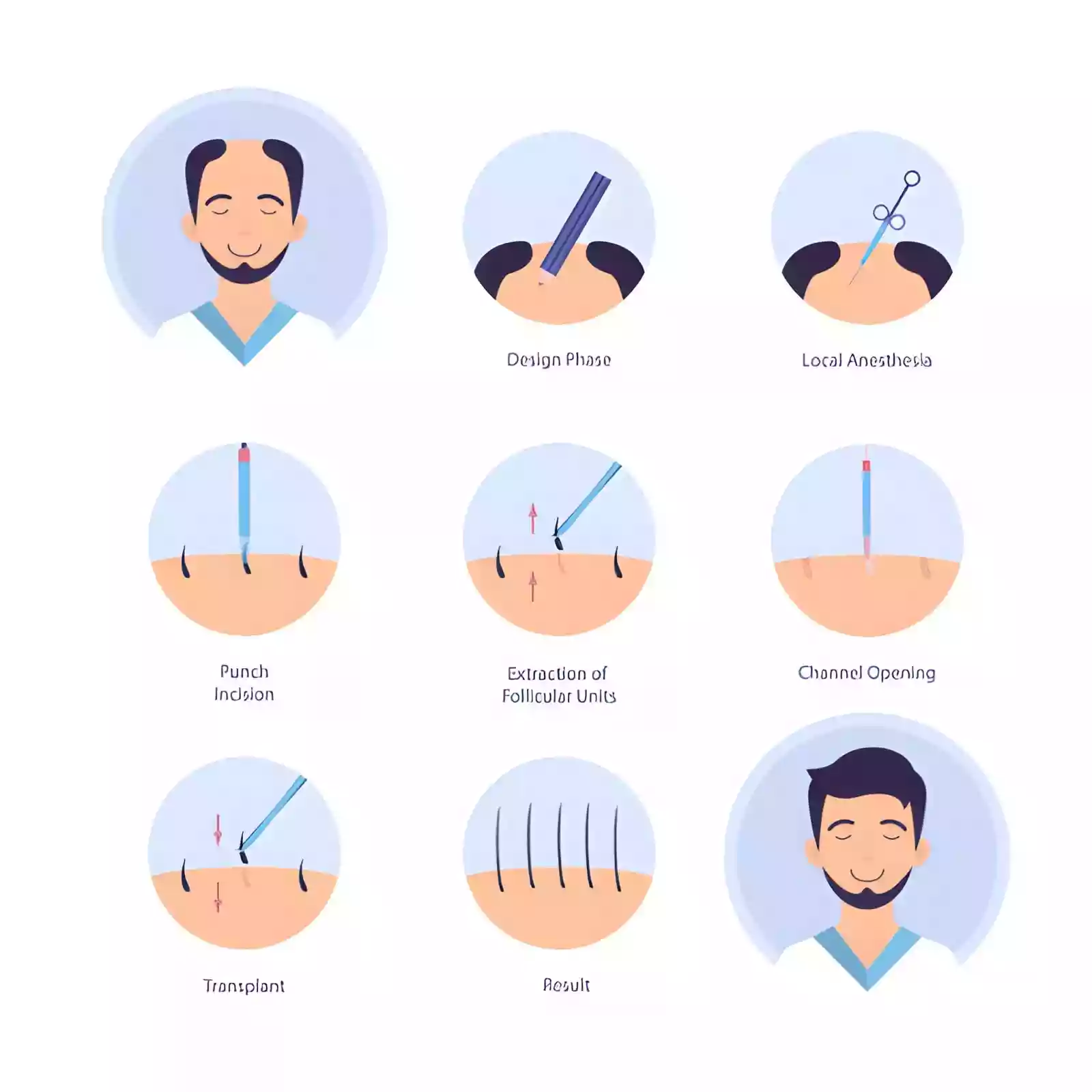
Hybrid Hair Transplant Turkey: Procedure Step by Step
The exact procedure depends on what the clinic means by “hybrid.” Patients should therefore receive a clear explanation of the techniques planned for their own case and who performs each stage.
Consultation and Medical Review
The medical team reviews hair-loss history, previous treatments or transplants, relevant health information, medications and treatment expectations.
Donor Assessment
The donor area is evaluated to estimate what can reasonably be harvested while preserving its appearance and considering future needs.
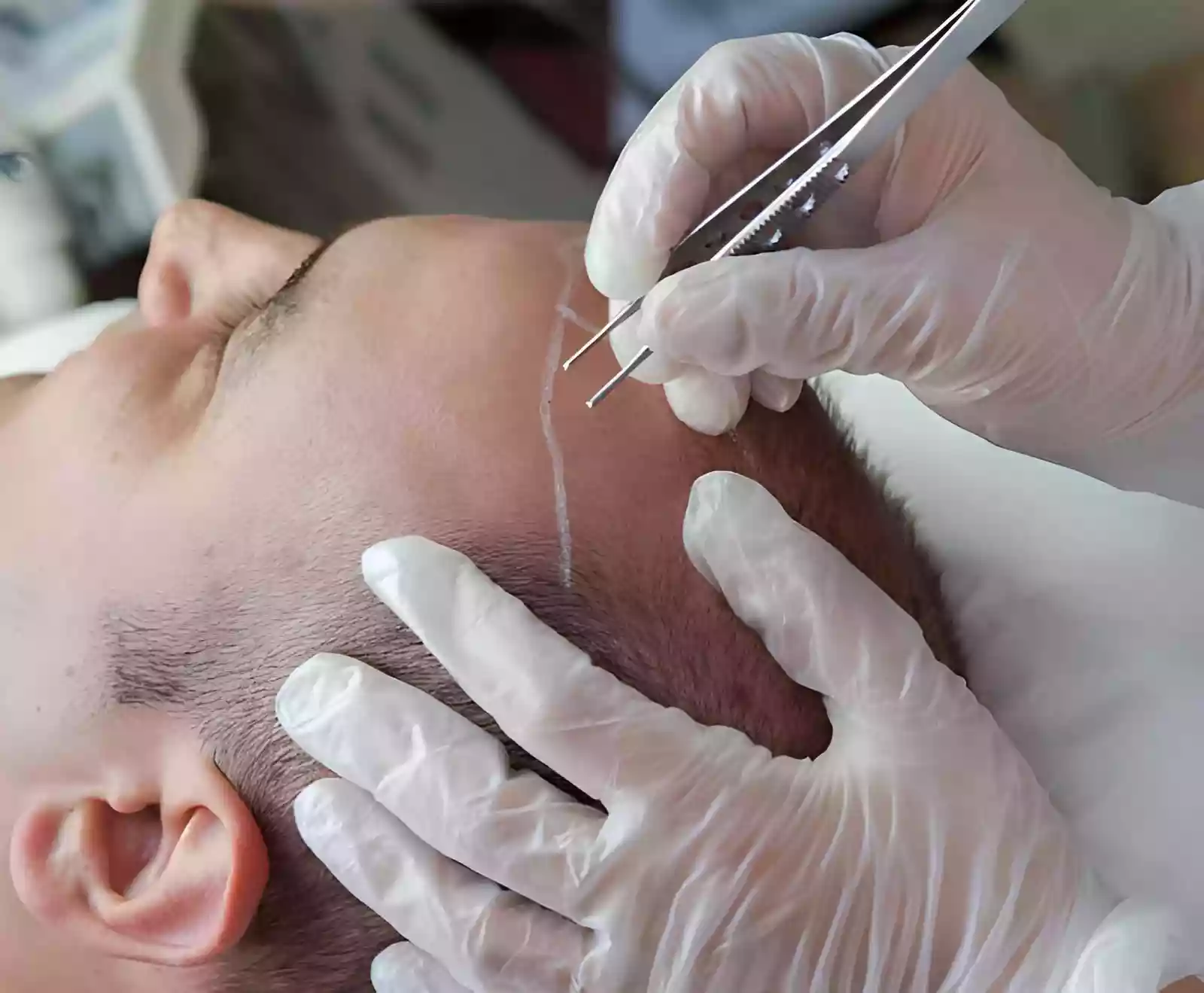
Hairline and Recipient Planning
The frontal zone, mid-scalp and crown are considered together. Treatment priorities and approximate graft allocation are determined before extraction.
Follicular Unit Extraction
Selected follicular units are individually extracted from the donor region when an FUE-based approach is used.
Recipient-Site and Implantation Strategy
The planned techniques are applied to the relevant areas. If different approaches are combined, the provider should be able to explain the purpose of each one.
Post-Procedure Review
The implanted and donor areas are reviewed and individualized washing, medication and early recovery instructions are provided.
 Donor Management Before Hybrid Hair Transplantation
+
Donor Management Comes Before Technique
A sophisticated implantation plan cannot compensate for poor donor management. Donor follicles are a limited resource, especially for patients who may continue losing native hair over time.
A responsible plan balances what can be achieved in the current session with preservation of donor options for the future.
Potential Advantages and Limitations of Hybrid Planning
A combined strategy can offer flexibility, but the word “hybrid” should not be treated as evidence that a procedure is automatically superior to a well-planned single-technique transplant.
Potential Flexibility
Different recipient areas may be approached differently when there is a practical reason related to existing hair, distribution or implantation planning.
No Automatic Density Advantage
Final density depends on donor capacity, graft growth, scalp characteristics, treatment area and distribution—not simply on combining technique names.
No Universal Faster Recovery
Recovery varies according to the procedure performed and the individual. A hybrid label does not guarantee faster healing.
More Complex Is Not Always Better
If one approach adequately meets the treatment objectives, adding another technique simply to market the procedure as “hybrid” may offer no meaningful advantage.
 Choosing Techniques According to the Treatment Area
+
Risks and Safety Considerations
Hair transplantation is a medical procedure. Combining techniques does not remove the usual surgical and post-operative considerations.
The provider should explain risks, alternatives, expected limitations and post-operative responsibilities before consent.
Recovery and Hair Growth After a Hybrid Hair Transplant
The recovery pattern depends on the actual procedure performed rather than the “hybrid” label. Early healing occurs first, while visible hair growth is a much longer biological process.
Redness, crusting, tenderness and swelling may occur. The recipient area should be protected according to the medical team’s instructions.
Patients normally follow a specific washing protocol while the implanted and donor areas continue to heal. Crusts should not be forcibly picked.
Many transplanted hair shafts may shed before new growth becomes visible. Early appearance should not be used to judge the final result.
New growth commonly develops gradually from around the third or fourth month, with further maturation over subsequent months. Individual timing varies.
Hybrid Hair Transplant vs FUE, Sapphire FUE and DHI
Follicular units are individually removed from the donor area. Recipient-site creation and implantation still require separate planning.
Sapphire blades may be used for recipient-site creation. This does not automatically determine the quality of design, donor management or graft growth.
Implanter devices are used during graft placement. Whether this is appropriate depends on the individual treatment plan and recipient area.
The clinic should specify exactly what is being combined and why that combination has been selected for the patient’s hair-loss pattern.
 Istanbul Planning for International Hair Transplant Patients
+
Why Do International Patients Consider Hair Transplantation in Turkey?
Turkey has developed a substantial international hair-transplant market, with Istanbul hosting many providers serving patients who travel from abroad.
For an international patient, the practical appeal can include access to multiple providers, experience with overseas treatment logistics and the ability to compare different treatment approaches. Price can also be part of the decision, but it should not be the only criterion.
The number of clinics also means standards, staffing models, facilities and medical involvement can vary. A clinic’s location in Turkey does not by itself establish the quality or safety of treatment.
View Taksim Square on Google Maps →How to Compare Hybrid Hair Transplant Clinics in Turkey
Marketing terminology should come after medical transparency. Before deciding on a provider, ask for clear answers about the people, facility and treatment plan involved.
Before-and-after photographs can be useful context, but they should not be treated as a promise that another patient will obtain the same result.
Hybrid Hair Transplant Turkey: Frequently Asked Questions
01What is a hybrid hair transplant?
02Does hybrid hair transplant always mean FUE and FUT?
03Can Sapphire FUE and DHI be combined?
04Is a hybrid hair transplant better than FUE or DHI?
05Does a hybrid hair transplant provide more density?
06Is recovery faster with a hybrid hair transplant?
07When does new hair grow after a hybrid hair transplant?
08How should I choose a hybrid hair transplant clinic in Turkey?
Hybrid Hair Transplant Turkey: Technique Should Follow the Treatment Plan
Hybrid Hair Transplant Turkey should be understood as individualized combined treatment planning rather than a promise that using more techniques will automatically produce a better result.
The treatment plan should begin with the patient’s pattern of hair loss, donor capacity, hair characteristics and future needs. Only after these factors are assessed should the medical team decide whether one technique or a combination of approaches is appropriate.
Patients comparing treatment in Turkey should therefore look beyond labels such as hybrid, Sapphire or DHI and focus on what will actually be done, why it has been recommended, who will perform each stage and how the donor area will be managed over the long term.