
Doctor-Led Hair Transplant in Taksim, Istanbul: How to Avoid Hair Transplant Mills and Get a Natural Hairline in Turkey
Choosing a hair transplant in Taksim, Istanbul is not only about price, hotel quality or the number of grafts promised on WhatsApp. The real difference between an average result and a natural, life-changing transformation comes from medical planning, donor area protection, correct hairline design, graft survival and doctor-led decision making.
Turkey is one of the most popular destinations in the world for hair restoration, and Istanbul is at the center of this demand. Every year, thousands of international patients travel to the city for FUE hair transplant, Sapphire FUE, DHI hair transplant and beard transplant procedures. However, not every clinic offers the same standard. Some clinics focus on volume, aggressive advertising and low prices, while better medical teams focus on safe planning, realistic density and long-term natural results.
This guide explains how to choose a doctor-led hair transplant clinic in Taksim, how to avoid hair transplant mills, what questions to ask before booking, and why natural hairline planning matters more than a cheap package.
Why Taksim Is a Strategic Location for Hair Transplant Patients
Taksim is one of the most convenient areas in Istanbul for international medical travelers. It offers easy access to hotels, hospitals, clinics, transfer routes, restaurants, shopping streets and cultural landmarks. For patients coming from the UK, Europe, the USA, Canada, Australia or the Middle East, staying in Taksim makes the medical journey easier because everything is close and practical.
A typical hair transplant package in Taksim may include airport transfer, hotel accommodation, blood tests, doctor consultation, surgery, PRP treatment, medication, shampoo, lotion and the first hair wash. This makes Istanbul attractive for patients who want a complete medical tourism experience without organizing every detail separately.
But location alone is not enough. A clinic can be in the best area of Istanbul and still provide poor planning. The most important question is not only “Where is the clinic?” but also “Who is responsible for my medical result?”
What Is a Doctor-Led Hair Transplant?
A doctor-led hair transplant means that the medical doctor is actively involved in the important stages of the procedure. This does not mean the doctor must personally perform every single technical movement for 7 hours. In modern hair restoration, trained medical teams may assist during extraction, graft preparation and implantation. However, the doctor should be responsible for diagnosis, planning, hairline design, donor area evaluation, graft strategy and supervision of critical steps.
A doctor-led approach usually includes:
Hair loss diagnosis and Norwood scale assessment.
Donor area evaluation before promising graft numbers.
Medical history review and blood test control.
Personalized hairline design based on age, face shape and future hair loss.
Technique selection between Sapphire FUE, DHI or combined methods.
Graft distribution planning for frontal hairline, mid-scalp and crown.
Safe donor management to avoid overharvesting.
Post-operative medication and recovery instructions.
This is what separates a medical hair transplant from a simple cosmetic sales package.
The Problem With Hair Transplant Mills in Turkey
Because Turkey is famous for affordable hair transplant procedures, some low-quality providers try to compete only with price. These places may promise unrealistic graft numbers, operate many patients at the same time, use the same hairline shape for everyone and provide very limited doctor involvement.
A hair transplant mill usually has warning signs:
Extremely cheap prices without clear medical explanation.
A guaranteed graft number before proper donor evaluation.
No clear answer about who performs extraction, channels or implantation.
Too many surgeries happening on the same day.
No detailed consultation before surgery.
Weak aftercare support after the patient returns home.
No realistic explanation about shock loss, crown growth or second-session planning.
The danger is not only poor density. Bad planning can damage the donor area permanently. Once the donor area is overharvested, it cannot be fully restored. This is why choosing the right clinic from the beginning is critical.
Natural Hairline Design: The Most Important Part of Hair Transplant
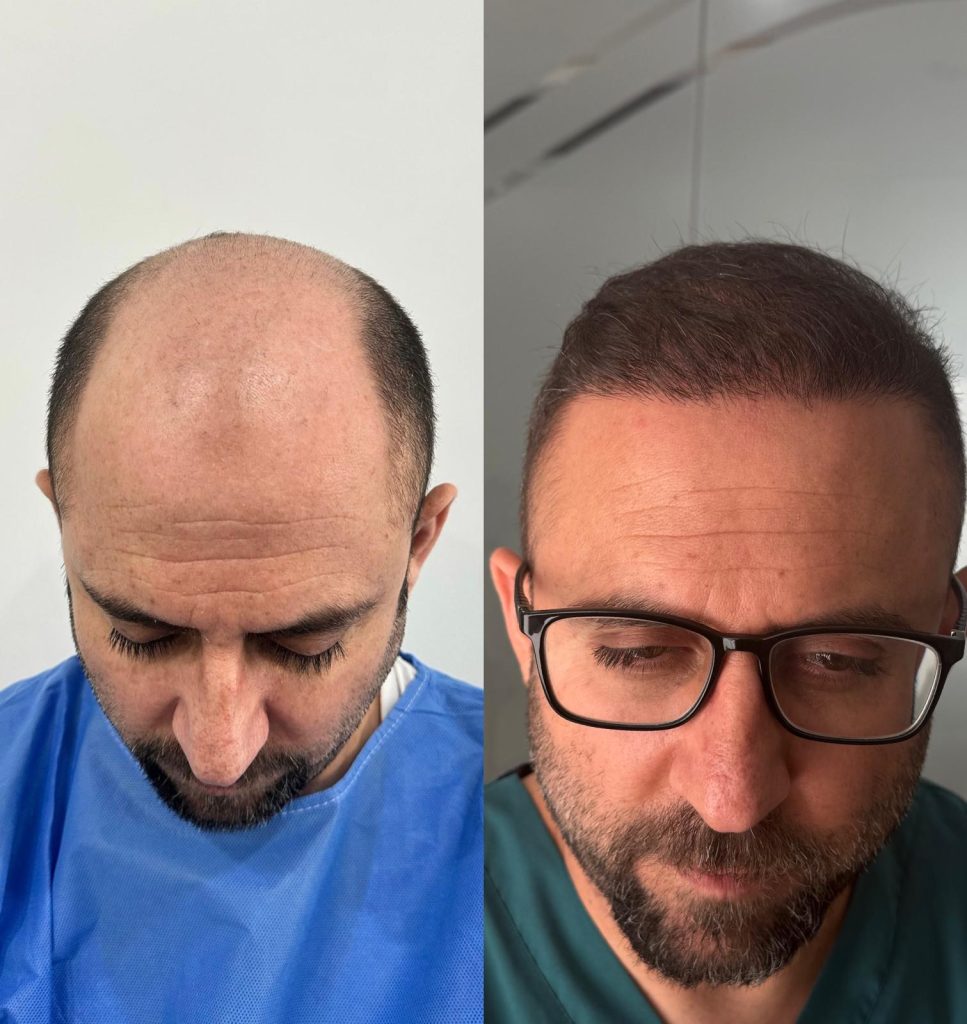
A natural hairline is not a straight line. It is not too low, too dense or too sharp. A good hairline must match the patient’s age, forehead shape, facial proportions, hair type and future hair loss risk.
Many patients ask for a very low hairline because they want a dramatic change. However, an aggressive low hairline may look unnatural after a few years, especially if hair loss continues behind the transplanted area. A responsible clinic in Taksim should explain what is possible, what is risky and what will look natural in the long term.
A natural hairline requires:
Single grafts in the front row.
Irregular micro-patterns, not a ruler-straight line.
Correct angle and direction.
Soft transition from hairline to density zone.
Planning according to future hair loss.
Protection of donor reserves.
This is where experience matters. A natural result is not created only by graft number. It is created by artistic design and medical discipline.
Sapphire FUE vs DHI: Which Is Better for Taksim Patients?
Patients often search for Sapphire FUE hair transplant in Taksim or DHI hair transplant in Istanbul and want to know which technique is better. The truth is that both techniques can produce excellent results when used correctly.
Sapphire FUE is commonly preferred for larger areas because it allows precise channel opening with sapphire blades. It can be useful for frontal restoration, mid-scalp coverage and high graft sessions.
DHI uses Choi implanter pens and may be preferred for controlled implantation, unshaven procedures, beard transplant, eyebrow transplant or cases where angle control is highly important.
Some patients may benefit from a combined approach. For example, Sapphire FUE may be used for larger coverage, while DHI may be used for detail work around the hairline or temples.
The best technique is not the one with the most expensive name. The best technique is the one selected after donor analysis, hair loss pattern, graft requirement and final density goals are reviewed.
How Many Grafts Do You Really Need?
One of the biggest mistakes in hair transplant marketing is promising too many grafts too quickly. A patient may ask for 5,000 grafts, but the donor area may only safely allow 3,000 to 3,500 grafts in one session. Another patient may need only 2,500 grafts for a strong frontal result.
A responsible hair transplant clinic in Taksim should not sell grafts like a product. Grafts are limited medical resources. Every graft removed from the donor area must be used strategically.
General graft planning may include:
Hairline correction: 1,500 to 2,500 grafts.
Frontal area restoration: 2,500 to 3,500 grafts.
Front and mid-scalp coverage: 3,500 to 4,500 grafts.
Crown restoration: depends heavily on donor quality and hair loss level.
Full scalp restoration: may require more than one session.
The goal should not be “maximum grafts at any cost.” The goal should be maximum natural improvement with safe donor preservation.
What International Patients Should Ask Before Booking
Before booking a hair transplant in Taksim, Istanbul, patients should ask direct questions. A serious clinic should answer clearly.
Who is the operating doctor?
Is the doctor present during the procedure?
Who performs graft extraction?
Who opens the recipient channels?
Who implants the grafts?
How many patients are treated on the same day?
Is the procedure performed in a licensed medical facility?
What happens if I need aftercare after returning home?
Can I send photos for follow-up?
What is included in the package?
Are there any hidden costs?
These questions are not rude. They are necessary. Hair transplant is a medical procedure, and patients have the right to know who is responsible for their surgery.
Why the Cheapest Hair Transplant Is Not Always the Best Deal
Many people travel to Turkey because hair transplant costs are more affordable than in the UK, USA, Canada or Australia. This is one of the strongest advantages of Istanbul. However, choosing the cheapest option can be dangerous.
A poor hair transplant can cost more in the long run because repair surgery is more difficult, more expensive and sometimes limited by donor damage. Patients may need camouflage work, SMP, beard graft extraction or second-session correction.
A good clinic is not simply expensive or cheap. A good clinic is transparent. It explains what is included, what is realistic and what result can be expected. The best value comes from medical quality, not from the lowest price.
Recovery After Hair Transplant in Taksim
Most international patients stay in Istanbul for around three nights. The first day is usually arrival and consultation. The second day is surgery. The third day is first wash and medical control. After that, many patients fly home with instructions.
The early recovery period usually includes redness, swelling, scabbing and sensitivity. Scabs generally begin to clear within the first two weeks. Shock loss may happen in the first months. New growth usually starts around month three or four. Stronger visible improvement appears between six and nine months. Final results are usually evaluated around twelve months, while crown results may take longer.
Patients should avoid heavy gym training, swimming, direct sun exposure, alcohol and smoking during the early healing phase. Following aftercare instructions is essential for graft survival and clean recovery.
Why Aftercare Matters
Hair transplant does not end when the surgery finishes. Aftercare is part of the result. Patients should receive clear instructions about sleeping position, washing, medication, shampoo use, swelling control, scab removal and follow-up photos.
A strong clinic should remain available after the patient returns home. This is especially important for international patients who cannot visit the clinic every week. WhatsApp support, photo evaluation and long-term guidance can make the process safer and more comfortable.
Who Is a Good Candidate?
A good candidate for hair transplant usually has a healthy donor area, realistic expectations and stable general health. Patients with early hair loss may need medical treatment before surgery. Patients with advanced Norwood hair loss may need staged planning instead of one aggressive session.
A good candidate understands that hair transplant redistributes existing hair. It does not create unlimited new hair. The donor area must be protected for the future.
Why Choose Hair Transplant in Taksim, Istanbul?
Taksim offers a powerful combination of medical access, hotel comfort, international transport, city convenience and experienced hair restoration teams. For patients who want a short but complete medical trip, Taksim is one of the most practical locations in Istanbul.
The right clinic can offer:
Personalized consultation.
Sapphire FUE and DHI options.
Natural hairline planning.
VIP transfers.
Hotel accommodation.
Blood tests and PRP.
First wash and aftercare.
English-speaking patient coordination.
Long-term follow-up support.
This makes Taksim a strong destination for patients who want both medical quality and travel comfort.
Final Thoughts: Choose Planning, Not Promises
A successful hair transplant is not about chasing the biggest graft number or the lowest price. It is about choosing the right medical team, protecting the donor area and creating a natural hairline that will still look good in the future.
If you are planning a hair transplant in Taksim, Istanbul, focus on doctor involvement, clinic transparency, realistic planning and long-term results. Avoid hair transplant mills that sell impossible promises. Choose a clinic that explains every step clearly and treats your donor area as a valuable medical resource.
A natural hair transplant should not look like a transplant. It should look like your own hair, designed carefully, implanted correctly and supported with professional aftercare.
For international patients searching for hair transplant Turkey, hair transplant Istanbul, Sapphire FUE in Taksim, DHI hair transplant in Istanbul or doctor-led hair transplant clinic in Turkey, Taksim remains one of the strongest choices when the procedure is planned responsibly.