Beard and Mustache Transplant explains FUE and DHI, facial hair design, donor planning, graft placement, recovery, risks and expected growth.
Beard and Mustache Transplant
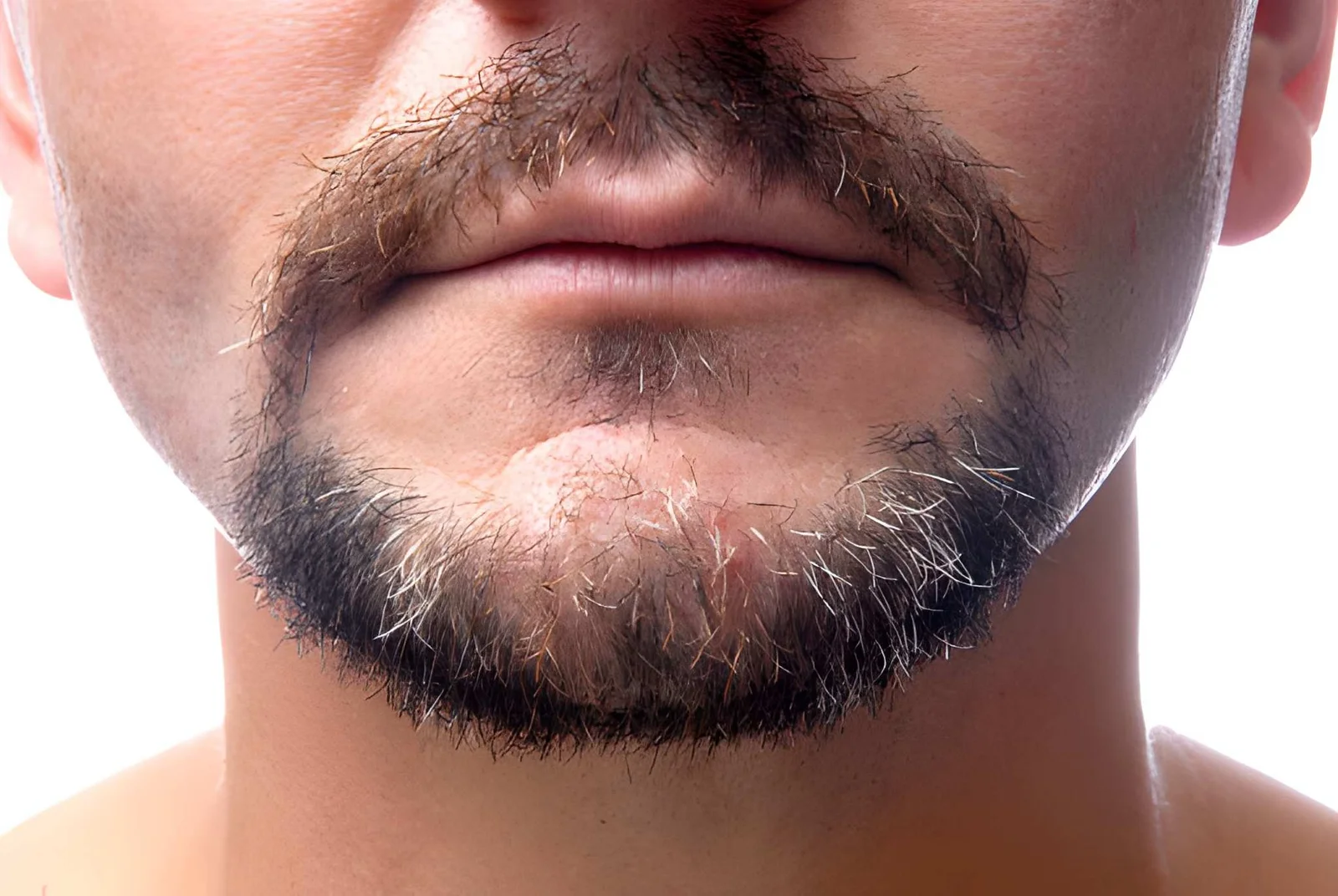
FACIAL HAIR RESTORATION • ISTANBULA beard and mustache transplant transfers selected hair follicles from a suitable donor area to facial regions where hair is absent, sparse, uneven or affected by certain scars.
Unlike scalp transplantation, facial hair restoration requires particular attention to angle, direction, distribution and design. The objective is not simply to place a large number of grafts. The transplanted follicles need to fit the patient’s facial proportions and existing beard or mustache pattern.
 Beard and Mustache Transplant
+
Understanding Beard and Mustache Transplantation
Facial hair transplantation uses follicular units obtained from a suitable donor region and places them into planned areas of the beard, mustache, goatee, sideburns or other facial zones.
People consider the procedure for different reasons. Some have naturally sparse facial hair. Others have asymmetry, isolated gaps, limited mustache density or areas where hair growth is reduced. Certain suitable scars may also be considered for transplantation after assessment.
Genetics and hormonal factors play important roles in natural facial hair development. Therefore, limited beard growth does not automatically mean that transplantation is the correct option. The cause and pattern of reduced facial hair should be considered during assessment.
 Facial Hair Design Before Beard and Mustache Transplant
+
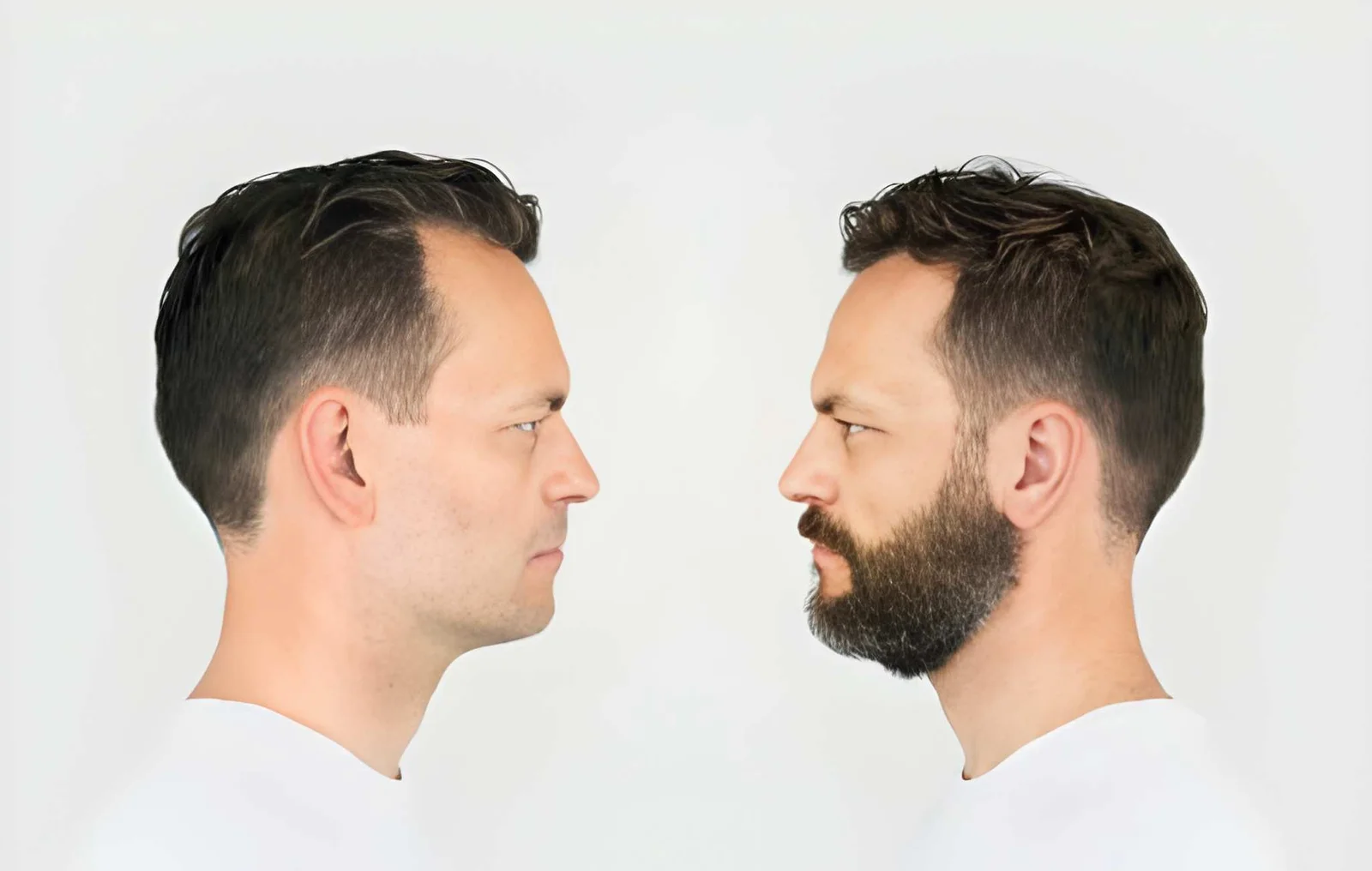
Facial Hair Design Is More Than Drawing a Beard
A natural-looking beard is not a solid block of equally dense hair. Facial hair changes direction and character across the cheeks, jaw, chin, sideburns and mustache.
The upper beard line should suit the patient’s existing growth and facial proportions rather than following an identical template for every face.
Mustache grafts require careful orientation because small changes in angle can be visually obvious in the central face.
The chin and goatee can contribute strongly to the overall appearance, so graft distribution should be coordinated with the mustache and jawline.
Density and direction should transition naturally toward the jaw and sideburn regions rather than ending in an artificial-looking border.
Angle, Direction and Graft Selection
Facial hair exits the skin at characteristic angles that vary by region. Reproducing these changes is one of the important planning considerations in beard and mustache transplantation.
For this reason, graft count is only one part of the plan. A larger number of grafts does not automatically produce a more natural result.
Who May Be a Candidate for Beard and Mustache Transplant?
Candidate assessment should consider both the facial recipient area and the donor supply. The procedure may be considered for selected patients with limited or uneven facial hair who have an appropriate donor area and realistic expectations.
Naturally Sparse Facial Hair
Some patients have limited beard or mustache growth because of their natural genetic pattern. Transplant suitability depends on the areas involved and available donor hair.
Patchy or Uneven Growth
Selected gaps may sometimes be treated to improve continuity between existing areas of facial hair, depending on the pattern and underlying cause.
Beard Shape or Border Refinement
Some patients seek greater continuity along the cheeks, jawline, goatee or sideburn region rather than complete beard reconstruction.
Selected Scar Areas
Hair transplantation may sometimes be considered for suitable scarred areas, but scar tissue can differ from normal skin and requires individual assessment.
FUE and DHI for Beard and Mustache Transplant
Technique terminology can be confusing because extraction and implantation are separate stages. The appropriate approach depends on the donor area, recipient zones, existing facial hair and treatment plan.
With FUE, follicular units are individually extracted from the donor region. The technique leaves many small extraction sites rather than a linear donor scar.
DHI generally describes an implantation approach using implanter devices. It should not be confused with a completely separate donor extraction method.
The quality of facial hair restoration also depends on design, graft handling, donor management, angle, direction and the suitability of the plan for the individual patient.
Beard and Mustache Transplant Procedure Step by Step
The exact sequence can vary between providers and patients. A typical treatment pathway includes assessment, design, donor extraction, graft preparation, facial implantation and early aftercare.
Medical and Facial Hair Assessment
The consultation reviews the facial hair pattern, donor area, medical history, medications, previous procedures and the patient’s objectives.
Beard and Mustache Design
The planned borders and treatment zones are reviewed before the procedure. Existing facial hair, symmetry and facial proportions should guide the design.
Donor Planning
The donor region is examined to determine which follicles may be suitable and how much can reasonably be harvested without unnecessary depletion.
Follicular Unit Extraction
When FUE is used, follicular units are individually removed from the planned donor area. Grafts are then prepared and handled for implantation.
Facial Placement
Grafts are distributed through the selected beard and mustache zones according to the planned direction, angle and density pattern.
Post-Procedure Instructions
Patients receive guidance for early washing, protecting the recipient area, medication where prescribed and other recovery precautions.
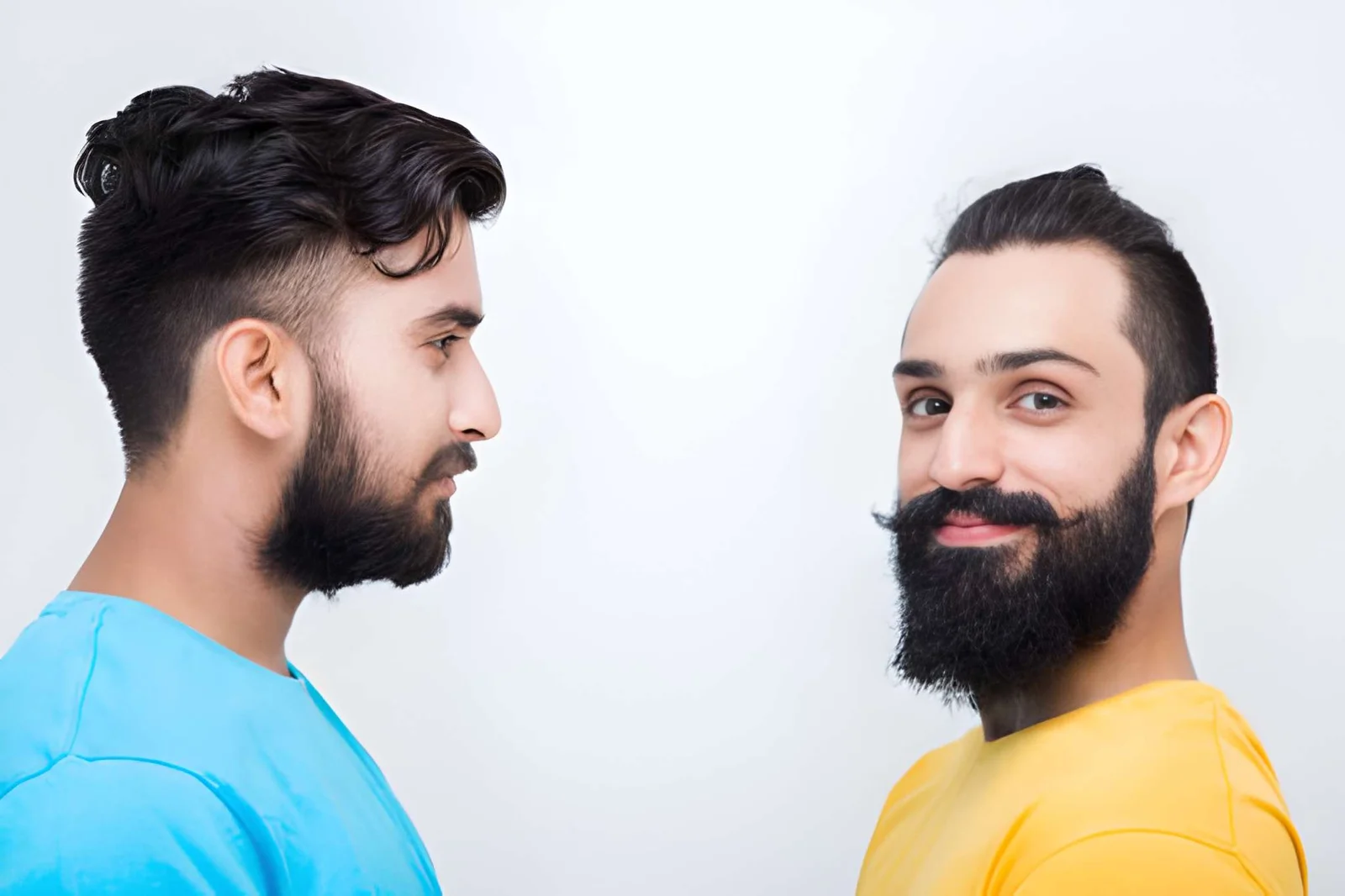
Where Does the Donor Hair Come From?
The scalp donor region is commonly considered for facial hair transplantation because it can provide transplantable follicular units. However, scalp and beard hair are not identical.
Using donor follicles for the beard also means those follicles are no longer available for another recipient area. Donor allocation therefore deserves long-term planning.
 Donor Hair Planning for Facial Hair Transplantation
+
How Many Grafts Are Needed for a Beard or Mustache?
There is no single graft number that applies to every beard or mustache transplant. A patient seeking correction of a small gap has very different requirements from someone considering reconstruction across the cheeks, jawline, chin and mustache.
The dimensions of the recipient area have a direct effect on the number of grafts that may be considered.
Existing facial hair can influence how grafts need to be distributed and whether the objective is filling gaps or creating broader coverage.
The visual effect of a graft count can vary according to hair calibre, curl and contrast with the skin.
The desired beard design should remain compatible with the amount and quality of donor hair that can reasonably be used.
For a broader explanation of how graft numbers are planned, read How Many Grafts Do I Need for a Hair Transplant in Taksim, Istanbul?
Recovery After Beard and Mustache Transplant
Recovery varies between patients and according to the extent of treatment. The facial recipient area is highly visible, so understanding the early appearance before planning work or travel can be particularly useful.
Small crusts, redness, tenderness and some swelling may occur around the implanted areas. The grafts should be protected according to the post-operative instructions.
Crusting generally reduces as healing progresses. Patients should follow the clinic’s washing instructions rather than scratching or forcibly removing crusts.
Transplanted hair shafts may shed during the early post-transplant period. This does not by itself determine the eventual result because the follicles remain beneath the skin.
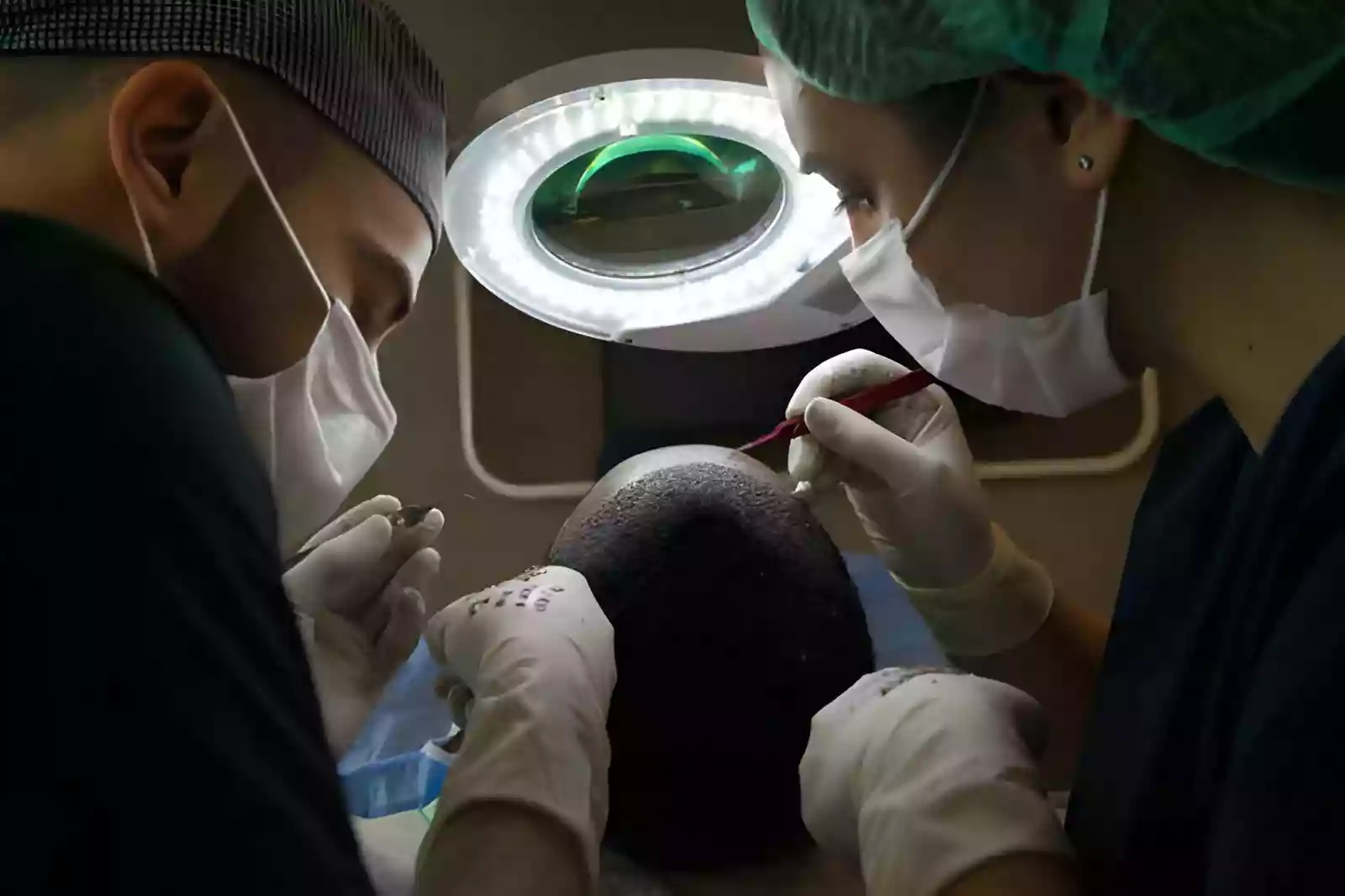
New growth may become noticeable gradually from around the third or fourth month. Appearance can continue changing as transplanted hairs grow and mature over subsequent months.
No individual timeline or final density can be guaranteed. Healing and hair growth vary from person to person.
 Growth and Grooming After Facial Hair Transplantation
+
What Can You Expect From the Final Appearance?
The objective is generally to create facial hair that integrates naturally with the patient’s existing beard or mustache pattern. However, results vary and transplanted density cannot simply reproduce any requested photograph or style.
Once transplanted hairs have grown sufficiently, they can generally be trimmed and groomed. Because donor hair retains important characteristics of its original donor site, its growth behaviour may not be identical to native facial hair.
Risks and Limitations of Beard and Mustache Transplant
Facial hair transplantation is a medical procedure and should be considered with the same attention to informed consent, risks and realistic expectations as other hair-restoration procedures.
Patients should receive a clear explanation of potential risks, alternatives and expected limitations before deciding on treatment.
Questions to Ask Before Facial Hair Transplantation
A consultation should provide more than a graft estimate. It should explain how the design will be created, who performs each stage and how the treatment plan protects both the face and donor region.
Who is the medically responsible doctor for my procedure?
Who will perform the extraction, recipient-site planning and implantation?
How will my beard line and mustache design be adapted to my facial proportions?
How will graft angle and direction change across different areas of my face?
How has the proposed graft number been estimated and what donor hair will be used?
How might using scalp donor hair for my beard affect future scalp hair-transplant options?
What risks and limitations are particularly relevant to my skin, facial hair and donor characteristics?
What aftercare will I need after I return home?
Beard and Mustache Transplant in Istanbul
Istanbul has a large international hair-restoration market, and facial hair transplantation is offered by providers serving both local and overseas patients.
For international patients, location can make consultation, accommodation and post-procedure travel planning easier. However, choosing a clinic should not be based on location or price alone.
Patients should compare the medical team, facility, donor assessment, facial design process, division of surgical roles, aftercare and clarity of informed consent.
View Taksim Square on Google Maps →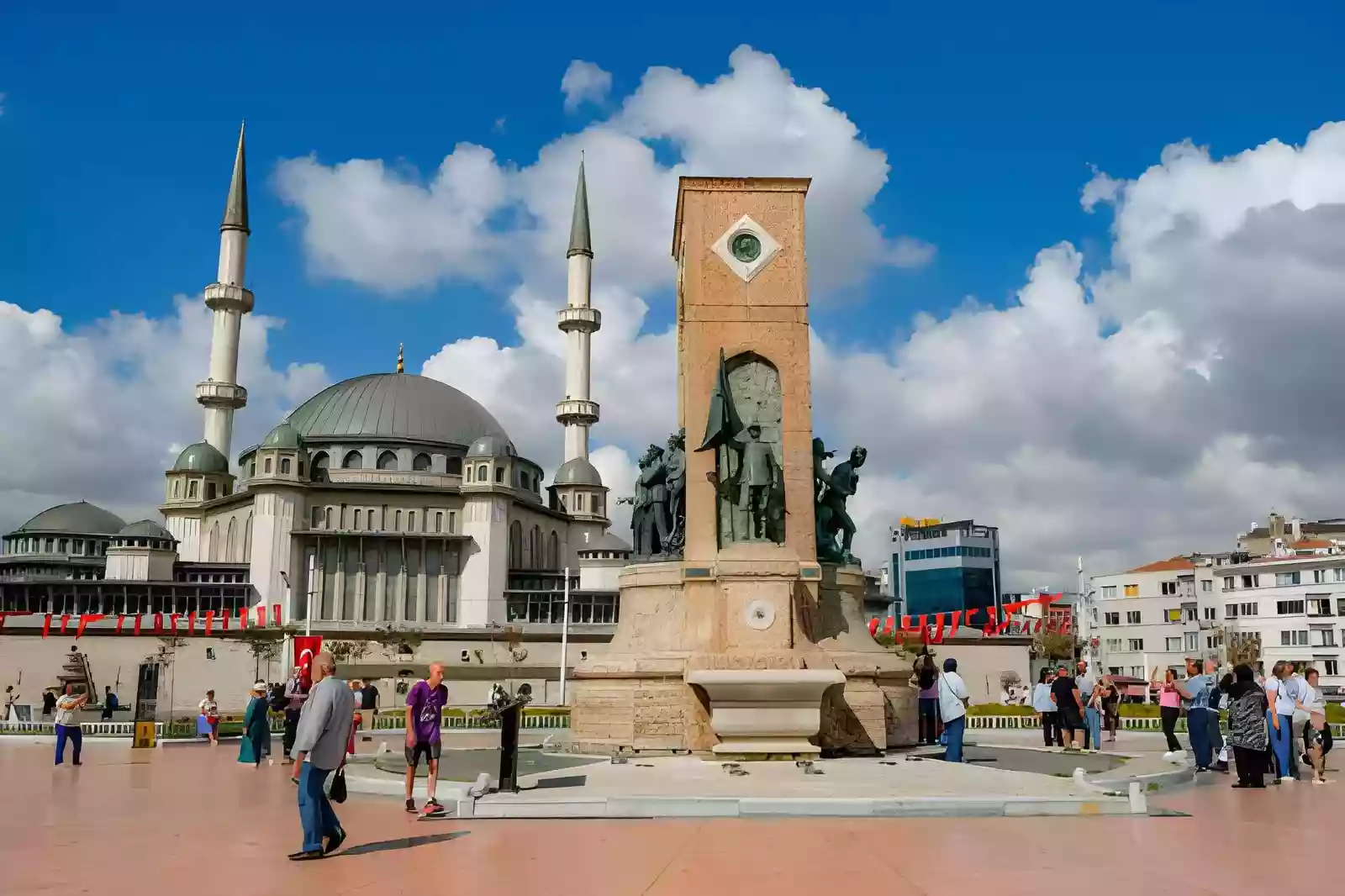 Taksim, Istanbul for International Hair Transplant Patients
+
Beard and Mustache Transplant: Frequently Asked Questions
01What is a beard and mustache transplant?
02Where does the donor hair for a beard transplant come from?
03How many grafts are needed for a beard and mustache transplant?
04Is FUE or DHI better for a beard transplant?
05Is beard and mustache transplantation painful?
06When does transplanted beard hair start growing?
07Can transplanted beard hair be shaved and trimmed?
08Is a beard and mustache transplant permanent?
Beard and Mustache Transplant: Planning Matters More Than Graft Count
Beard and Mustache Transplant planning is different from simply filling an empty area with as many follicles as possible. Facial hair is defined by shape, angle, direction, transitions and the relationship between the mustache, cheeks, chin, jawline and sideburns.
The donor supply also needs to be treated as a limited resource. A realistic plan considers what can be achieved with the available follicles while preserving the donor region and taking possible future hair-restoration needs into account.
Technique names such as FUE and DHI can be useful when describing parts of the procedure, but they should not replace individualized assessment. The final treatment plan should explain why the proposed technique, graft distribution and facial design are appropriate for the individual patient.