Female Hair Transplant Taksim focuses on natural hairline restoration, temple density and carefully planned coverage for women experiencing suitable patterns of hair loss.
Female cases often require a different design strategy from male hair transplantation. Existing hair, donor capacity, the cause and pattern of thinning, hairline shape and the possibility of a partial or unshaven approach all need to be considered before treatment.
Female-Focused DesignSoft hairline contours and balanced temple coverage are planned around facial proportions and existing hair.
Technique OptionsFUE-based extraction and DHI implantation may be considered depending on the individual case.
Shaving StrategySelected female patients may be suitable for partial-shave or unshaven approaches rather than a full head shave.
Female Hair Transplant Taksim: Understanding Female Hair Loss
Female hair loss can have different patterns and causes. The original article highlights hormonal changes after childbirth or menopause, genetics and female-pattern alopecia, traction from tight hairstyles, stress, nutritional factors and thyroid imbalance. Because these causes are not interchangeable, identifying the pattern of loss is an important part of deciding whether transplantation is appropriate.
A transplant is primarily a redistribution procedure: suitable follicles are moved from a donor area to selected areas requiring additional coverage. It does not automatically address an underlying cause of ongoing diffuse hair loss.
High or irregular hairline
Temple thinning
Selected frontal thinning
Traction-related loss in suitable cases
Donor density assessment
Existing hair preservation
+Female Hair Transplant Taksim – Female Hair Loss Assessment
FUE and DHI for Female Hair Transplant Taksim
The source article describes Micro FUE and DHI as treatment methods used for female transplantation. The practical choice should depend on donor characteristics, the recipient area, existing hair and the planned shaving strategy rather than on the technique name alone.
01FUE-Based ExtractionFollicular units are extracted individually from the donor area. In female cases, the donor shaving pattern can sometimes be limited to a concealed section depending on the treatment plan.
02DHI ImplantationImplanter pens can be used to place grafts between or around existing hair in selected cases, with attention to direction, angle and distribution.
03Unshaven PlanningSome women may prefer to preserve the visible length of their existing hair. Whether an unshaven or partial-shave approach is practical depends on graft requirements and donor access.
Important: FUE and DHI describe parts of the surgical approach. The quality of the plan also depends on diagnosis, donor management, design, graft handling and careful implantation.
The original article places strong emphasis on a soft, balanced female hairline. This is one of the most important differences in planning: the goal is not simply to lower the hairline or place as many grafts as possible.
Hairline height, forehead proportions, temple shape, existing frontal hairs and the natural direction of growth should be assessed together. Finer grafts can be prioritized near the visible front edge, while density can be distributed progressively behind the hairline.
Natural rather than artificial: a successful design should blend with the woman’s existing hair and facial proportions instead of creating a rigid or overly dense front line.
How Female Hair Transplantation Is Planned
The source describes consultation, design, donor extraction, implantation and healing as the main stages. A clearer female-focused pathway is:
1AssessmentReview the pattern of thinning, donor area, existing hair and relevant medical history.
2DesignPlan the hairline or density zones according to facial proportions and treatment priorities.
3Donor StrategyDecide how much donor access and shaving are necessary for the planned graft number.
4ExtractionSuitable follicular units are harvested individually from the planned donor zone.
5ImplantationGrafts are placed according to the required angle, direction and density distribution.
6AftercareEarly washing, sleeping, activity and scalp-care instructions are followed during recovery.
Female Hair Transplant Taksim Recovery Timeline
The original article describes mild redness and swelling in the first days, temporary shedding in the following weeks, new growth beginning over subsequent months and maturation toward the end of the first year. These timings are better treated as approximate because healing and growth vary between patients.
Days 1–3: early redness or swelling may occur
First 10 days: washing and crust care follow the clinic’s protocol
Weeks 2–4: temporary shedding can occur
Months 3–4: early new growth may begin to appear
Months 6–9: density and hair calibre continue developing
Around 12 months: a more mature result can usually be assessed
Recovery is individual. Exact washing, exercise, sun exposure and hair-care instructions should follow the treating team’s case-specific advice.
Who May Be Suitable for a Female Hair Transplant?
Not every type of female hair loss is automatically suitable for transplantation. A useful assessment considers whether the thinning pattern is appropriate for surgical redistribution and whether the donor area can support the proposed treatment.
AHairline & TemplesWomen seeking restoration of a naturally high hairline, temple recession or selected frontal areas may be considered after assessment.
BStable Localised LossSelected areas of localised loss may be considered when donor supply and the underlying condition are appropriate for transplantation.
CDonor CapacityA usable donor area is essential. Diffuse thinning involving the donor region may affect whether transplantation is a suitable option.
Questions worth clarifying before treatment
What is the likely cause and pattern of my hair loss?
Is my donor area suitable?
Do I need full, partial or donor-only shaving?
Which areas should receive priority?
Who designs and performs each treatment stage?
What follow-up is available after I return home?
Planning a Female Hair Transplant Stay in Taksim
Taksim is a practical central base for an Istanbul treatment trip because it offers a broad choice of accommodation and transport connections. The exact convenience of a hotel still depends on the treatment facility and follow-up schedule.
For broader information about techniques, treatment planning and an Istanbul medical trip, see our Istanbul Hair Transplant Guide.
Keep the trip recovery-friendly: accommodation and sightseeing plans should work around the procedure and early aftercare rather than creating unnecessary travel immediately after treatment.
1Can women have a hair transplant without shaving all their hair?
In selected cases, partial-shave, donor-only shave or unshaven approaches may be possible. The practical option depends on donor access, graft requirements and the planned recipient area.
2Is DHI suitable for female hair transplantation?
DHI implantation can be considered in selected female cases, particularly when working around existing hair. Suitability depends on the individual treatment plan rather than gender alone.
3Can a transplant lower a naturally high female hairline?
Hair transplantation can be considered for selected women seeking hairline lowering or reshaping, provided the donor area and overall treatment plan are suitable.
4Can female temple thinning be transplanted?
Selected temple areas can be treated when transplantation is appropriate. Direction, angle and fine hairline blending are particularly important in this visible area.
5When does transplanted hair begin growing?
Early growth may begin to become visible after several months. Density and hair calibre continue developing, and a more mature result is commonly assessed around 12 months.
6Does female hair transplantation leave scars?
FUE-based extraction avoids a long linear donor scar, but it still creates small extraction sites. Visibility varies with extraction pattern, healing, donor characteristics and hairstyle.
7Is every woman with thinning hair suitable?
No. Female hair loss has multiple possible patterns and causes. Donor quality, stability and distribution of loss should be assessed before deciding whether surgical restoration is appropriate.
8What matters most when choosing a female hair transplant clinic?
Look beyond the technique name. Ask about medical assessment, female hairline experience, donor planning, who performs each stage, shaving options, realistic graft numbers and post-operative follow-up.
Female Hair Transplant Taksim: Natural Design Comes First
The strongest female hair transplant plan is not simply about adding more grafts. It begins with understanding the pattern of hair loss, protecting the donor supply and designing a hairline or density plan that blends naturally with the woman’s existing hair.
For suitable candidates, careful FUE-based extraction, precise implantation and realistic long-term planning can be combined to address selected hairline, temple and density concerns while preserving a natural appearance.
 +Female Hair Transplant Taksim – Natural Hairline Restoration
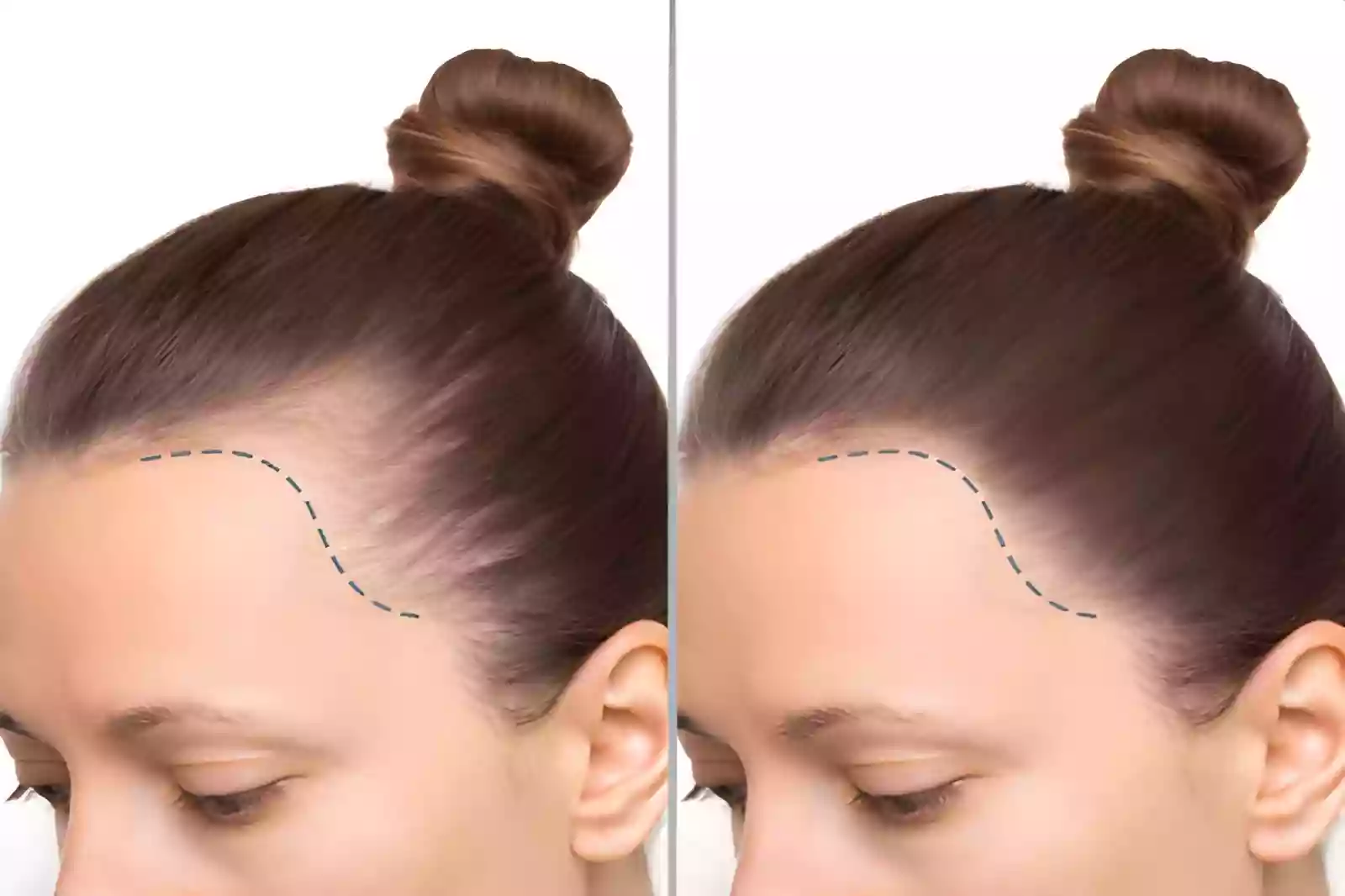 +Female Hair Transplant Taksim – Female Hair Loss Assessment
 +Female Hair Transplant Taksim – Natural Female Hairline Design